SYSTEM // LOADING
BIDQUEST // 2026
GRID // 1280px
BIDQUEST // 2026
Zero manual search • 100% Free
A new company can pursue opportunities whose conditions it meets, including an expressly applicable relaxation for eligible startups or MSEs.
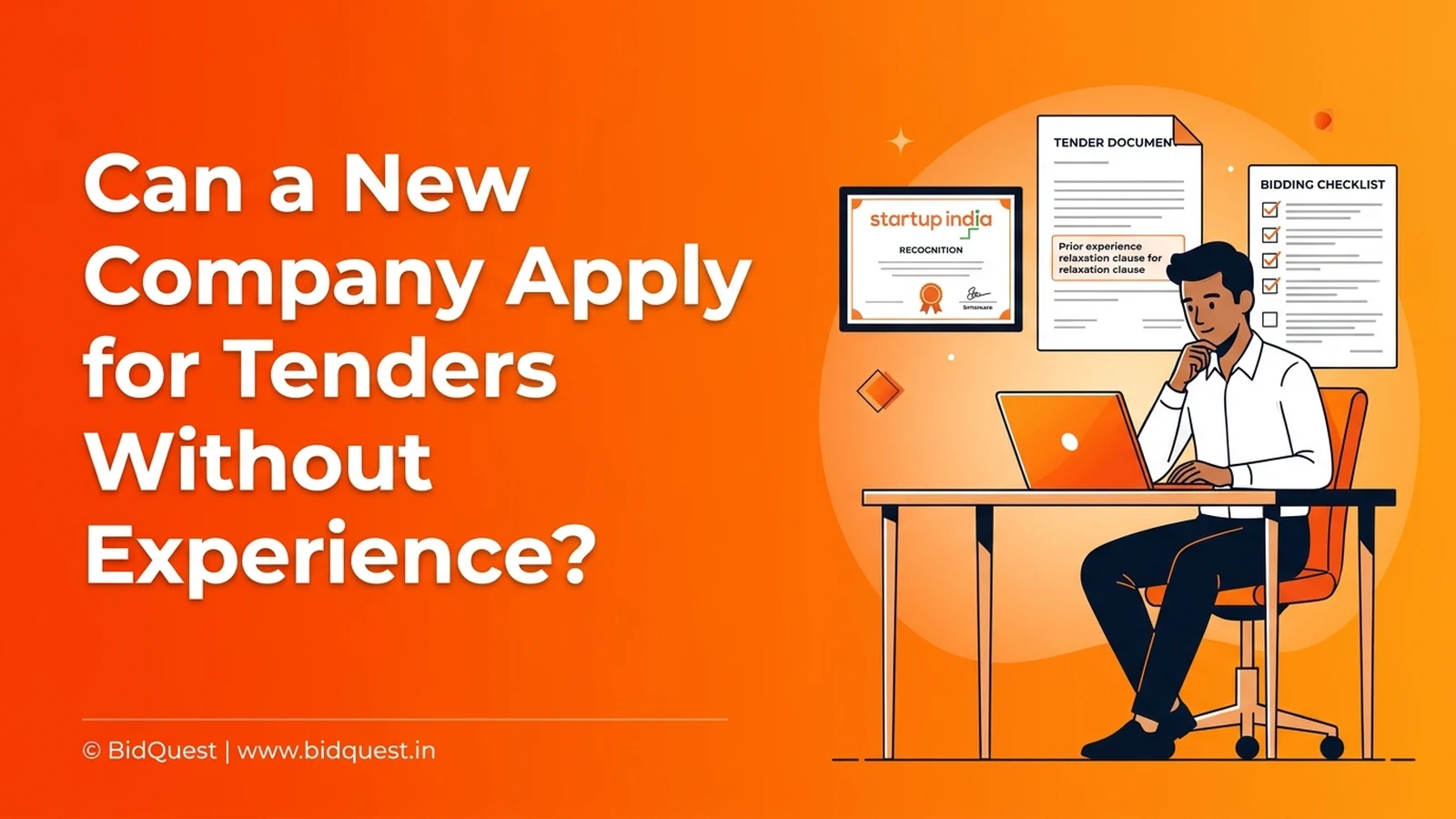
Choose a narrow offering before choosing a procurement portal. A business selling standard goods needs reliable sourcing and delivery, while a service provider needs people, coverage and evidence of completed outputs. List the work you can perform today and the dependencies you would need to establish before accepting an order. This makes the search and qualification process more focused. It also prevents money being spent on unrelated registrations or attractive opportunities whose actual delivery model the business has never examined.
Separate three questions: who will contract, what evidence permits participation and how performance will be financed. One certificate rarely answers all three. Have the appropriate business, technical and financial owners review their part, even when a small team means one person holds several roles. An adviser can help interpret a problem without becoming the source of facts the business cannot support. Keep an unresolved requirement visible until a legitimate record or authorised decision establishes the position.
A fictional small supplier finds an appealing office-supply notice. It can source the goods but has not checked the required delivery locations or the period before payment. Instead of buying inventory immediately, it maps those obligations and obtains supplier confirmation. The eventual decision may be to bid, seek a permitted clarification or decline. This example does not establish eligibility or profit for a real opportunity; it shows why registration and enthusiasm should be connected to an actual operating plan.
| Question | Evidence to review |
|---|---|
| Contracting identity | Genuine entity and authorised-person records |
| Participation basis | Actual clause and relevant qualification evidence |
| Delivery capability | Confirmed resources, sourcing and schedule |
| Funding readiness | Cash timeline and supported financing assumptions |
Record the decision and its conditions before spending or signing. Update it when a material fact changes, and retain the official notice and accepted offer for handover. The review is an internal planning aid, not a government-prescribed annexure or a substitute for competent advice on a consequential legal or tax question.
A partnership need not assume it must incorporate a company before considering every tender. The notice establishes acceptable bidder forms, while governing documents and applicable law determine the firm's authority and obligations. Prepare consistent identity, partner, tax, banking and signatory evidence. Check whether a particular registration or supporting document is required for this event. One partner's willingness to sign does not establish authority for every commitment. Keep firm experience separate from a partner's unrelated previous work unless attribution is allowed. Seek competent advice where liability, registration or authority matters. The business should approve the real financial and operational commitment through the arrangements actually applicable to the partnership.
A separate company is not automatically needed for each product or service category. Check whether the existing entity can lawfully undertake the activity and whether its registrations, authority and capabilities meet the actual procurement. Another entity can introduce extra accounts, compliance expense and experience-attribution problems without improving qualification. Regulated activities or specific structures may require particular treatment, which needs competent assessment. Keep category suitability distinct from legal identity. Where one entity serves several categories, describe genuine capabilities and track shared resources clearly. A broad business description is not evidence of competence in every advertised activity, and changing the company name does not create missing technical or financial credentials.
A sole proprietor can consider tenders that accept the relevant form, subject to the actual qualification and regulatory conditions. The proprietor, trade name, tax records, bank account and signing arrangements should describe the same business accurately. Read how the notice treats proprietorship evidence and experience attribution. Another firm's credentials do not automatically become yours because you helped with its projects. Keep financial exposure in view: operating a proprietorship and incorporating a company are different arrangements. Obtain appropriate advice on consequential commitments, and check performance capacity before quoting. The useful question is whether this proprietor can meet this contract, rather than whether proprietors are universally allowed or excluded.
Participation without GST registration depends on the bidder's actual tax position, the proposed supply and the procurement conditions. Avoid blanket statements that GST is always mandatory for every tender or unnecessary below a remembered figure. The buyer may require a GSTIN or accept specified evidence explaining its absence. Establish the legal position with a competent tax adviser, then check whether the notice accepts it. Keep initial participation separate from later invoicing and performance obligations. Do not borrow another entity's GST number or promise unverified tax treatment. The final offer should describe the bidder's real status and explain any permitted exception in the required way.
An individual must check whether the tender accepts that bidder type and whether the person can lawfully enter and perform the contract. Do not assume every procurement requires a private limited company, or that personal identification establishes business qualification. The buyer may require financial evidence, experience, registrations or particular facilities. Establish the contracting identity before creating accounts or paying charges. If trading as a sole proprietor, explain the connection between the person's name and business records. Keep contractual capacity, portal enrolment and tender eligibility as separate checks. A successful registration cannot resolve a mandatory condition that the proposed bidder does not meet.
A separate commercial office is not a universal requirement for every tender. Check whether the buyer requests a registered address, local service presence, workshop, inspected premises or storage facility. Those conditions establish different capabilities. A home address supported by genuine documents might satisfy address evidence while not providing a required service centre. Record the actual requirement and whether your arrangement can lawfully meet it. Do not rent premises solely because an agent says all bidders need an office, or declare a borrowed location available without permission. Consider inspections, access and communication needs so the arrangement supports delivery as well as registration and document preparation.
Start a government tender business by choosing something you can actually deliver, checking the buyer's eligibility conditions and preparing a consistent business identity. Portal registration provides access; it does not secure a contract. Read several complete notices before spending on inventory or consultants. Compare sourcing arrangements, cash requirements and delivery capacity with the proposed obligation. Prepare a complete cost model, including the period before payment, then pursue a manageable opportunity supported by truthful records. Retain the offer, approvals and submission acknowledgement. Your first objective should be a contract you can perform and finance, rather than the largest advertised value you can find.
No single starting-capital figure fits every tender business. Estimate pursuit expenses, refundable securities, supplier payments, transport, wages and the cash needed before buyer payment becomes available. Refundable EMD can tie up liquidity without automatically becoming a final expense. A small order may still require substantial funding when materials must be paid for early. Build a cash timeline and a slower-receipt scenario, identifying confirmed funding rather than hoped-for advances. Exclude an advance unless the actual contract provides it. Your affordable tender size follows from the timing of commitments and available resources, not merely from the amount required to complete the bid submission screen.
Government contracts can be commercially viable when the accepted price covers the complete obligation, financing needs and allocated risks. Government ownership of the buyer does not guarantee profit or immediate payment. Model actual sourcing, labour, logistics, relevant taxes, securities and possible deductions. Test lower quantities or slower receipts where the agreement leaves that exposure with you. Compare expected contribution with the effort and cash consumed. Award value alone is a poor measure of success: a smaller well-priced order can be more useful than a large commitment at an unsustainable rate. Review the result after execution to learn whether the original costing captured the real work.
A privately employed person should examine their employment agreement, outside-work policy, confidentiality duties and conflicts before running a tender business alongside the job. Permission for one activity should not be assumed to cover every later commitment. Check whether daytime clarification, signing, inspection and delivery can be handled by genuinely authorised people. Do not use an employer's confidential information, credentials or resources without authority. Government service can involve separate conduct restrictions requiring its own review. If the proposed business depends on availability you cannot provide, adjust the operating plan before bidding. Planning to resolve the conflict only after award leaves both employment and contract obligations exposed.
These official resources are starting points for checking the applicable process. Confirm the current notice, attachments, corrigenda and portal instructions for your own opportunity. A general explanation cannot establish eligibility, an exemption or acceptance for a particular bid. Historical manuals and registration guides may differ from a current screen or contract.
Explore opportunities with BidQuest. Compare a suitable notice with your documented capability before committing money, approving a price or submitting a bid.
Department of Expenditure. Accessed 7 Nov 2026.
Central Public Procurement Portal. Accessed 7 Nov 2026.

Learn how to read government tender documents in India: NIT, eligibility, technical specifications, BOQ, EMD, evaluation, corrigenda and submission checklist.
Read the guide
Learn how Indian MSMEs and contractors can find government tenders on CPPP, GeM and state portals, shortlist relevant notices and track corrigenda.
Read the guide
Government contracts can be commercially viable when the accepted price covers the complete obligation, financing needs and allocated risks.
Read the guide