SYSTEM // LOADING
BIDQUEST // 2026
GRID // 1280px
BIDQUEST // 2026
Zero manual search • 100% Free
PREPARE THE BID
Checklists and worked examples for BOQs, documents, corrigenda, technical bids, and submission readiness.

Provisional accounts are acceptable only if the applicable tender requirements permit them on the relevant basis.
Read the guide
Whether missing material can be requested or supplied after opening depends on the actual shortfall and clarification rules.
Read the guide
Quantity changes depend on the contract's actual variation or option provisions, including permitted limits, rates, timing and authority.
Read the guide
Post-opening negotiation is governed by the applicable procurement framework, actual tender and authorised process.
Read the guide
A consultant's preparation role does not automatically authorise unrestricted use of the bidder's DSC.
Read the guide
A foreign company should assess the actual procurement route, bidder eligibility and any permitted Indian partner arrangement, including applicable registration, origin, regulatory and.
Read the guide
Early termination depends on the actual agreement, applicable framework, stated ground and authorised procedure.
Read the guide
Check the partnership's actual governing documents, applicable law and tender requirements to establish who may sign and what evidence is needed.
Read the guide
Do not assume a proprietor's earlier activity or another firm's projects automatically become the experience of a newly incorporated company.
Read the guide
Subcontracted work needs the tender's actual attribution and evidence conditions checked.
Read the guide
Cancellation after financial opening must be assessed through the actual applicable framework, procurement terms and authorised decision.
Read the guide
A wrong tax assumption can affect price comparison, compliance or later invoicing, but its procurement consequence depends on the actual instructions and stage.
Read the guide
Ongoing work counts only on the basis permitted by the actual experience clause.
Read the guide
Do not add rows to an issued BOQ unless the actual procurement expressly permits the change.
Read the guide
Any review or challenge route depends on the applicable procurement, authority, legal framework and relevant deadlines.
Read the guide
Extra payment for additional work needs a supported basis in the actual contract and an authorised instruction or approval process.
Read the guide
After opening, the procurement's actual correction and clarification rules determine what can happen to an arithmetic error.
Read the guide
An RTI request should be considered under the applicable law, authority and information-access process, including relevant limits and exemptions.
Read the guide
TReDS-related invoice financing depends on the applicable platform, participants, accepted receivable and actual transaction terms.
Read the guide
A lender may consider financing supported by a government purchase order, but the actual product, eligibility, borrower strength and contract conditions determine availability.
Read the guide
EMD treatment after withdrawal depends on the timing, permitted process and actual security conditions.
Read the guide
Check whether the tender requires named personnel, evidence of availability or specific employment arrangements at bidding, mobilisation or another stage.
Read the guide
A fixed-price award does not automatically permit later increases because the supplier's costs rose.
Read the guide
A JV or consortium can support qualification only where the tender permits the arrangement and its actual rules on roles, combined credentials and responsibility are met.
Read the guide
Payment-term changes after award depend on the actual procurement framework, accepted offer and authority to amend.
Read the guide
Offer a discount only in the form and stage permitted by the actual tender.
Read the guide
Check the actual procurement's payment-source, bidder-identity and security rules before using an account belonging to another entity.
Read the guide
Whether a quote above the estimate is permitted or acceptable depends on the actual financial instructions, procurement framework and evaluation decision.
Read the guide
A zero entry must be assessed against the financial schedule's actual instructions and evaluation rules.
Read the guide
Reduction after partial performance is available only where the applicable contract and security arrangements permit it and the required authority approves the change.
Read the guide
An increase in your costs does not automatically create a right to refuse an award without consequence.
Read the guide
Check the issuing provider's current renewal process and the portal implications before expiry, leaving time for verification, delivery and testing.
Read the guide
Use the portal and tender's actual pre-deadline modification or resubmission process, noting any consequences for the existing release.
Read the guide
Reuse is appropriate only if the authorisation's actual scope and the new tender's requirements permit it.
Read the guide
Access to competitors' bid material depends on the applicable procurement system, stage and information rules.
Read the guide
Starting before formal documentation requires careful review of what binding commitment and authority actually exist.
Read the guide
Subcontract only on the basis permitted by the actual contract and applicable requirements.
Read the guide
A bank guarantee can substitute for cash only where the actual tender permits that security form and its required wording and submission process are satisfied.
Read the guide
Check the actual portal, token driver and signing utility's current support for your Mac and operating-system version before relying on it for submission.
Read the guide
Foreign experience should be assessed against the actual tender's scope, client, currency, period and evidence requirements.
Read the guide
Read whether the procurement accepts scanned copies, requires digitally signed files or calls for originals at a stated stage.
Read the guide
Do not assume a missing document can be uploaded after closing.
Read the guide
Check the actual cover and file-format instructions before replacing separate documents with a ZIP archive.
Read the guide
Group turnover should support a bid only where the actual procurement permits that attribution on a defined basis.
Read the guide
Use the buyer's prescribed format when the instructions require it.
Read the guide
Check the portal's current certificate requirements and whether the proposed signer is properly authorised to bind the bidding entity.
Read the guide
A valid DSC may be usable on more than one system when each portal's current requirements and mapping rules permit the actual configuration.
Read the guide
Leased equipment can support a capacity claim where the actual tender permits that arrangement and the evidence establishes genuine availability for the required period and location.
Read the guide
Non-performance can lead to contractual or procurement action where the applicable provisions and proper process support it, but it should not be described as automatic universal debarment.
Read the guide
Private-sector work can be relevant where the tender's similar-experience definition and evidence conditions permit it.
Read the guide
The lowest displayed price does not by itself guarantee award.
Read the guide
Use of a DSC must follow the actual certificate-holder, authority and platform requirements.
Read the guide
Check the actual official system and organisational instance identified by the tender rather than assuming similar domain names share every account and workflow.
Read the guide
The actual tender and portal instructions determine how individual attachments and the final bid must be signed.
Read the guide
The current portal and particular document determine whether download is available without login or requires an enrolled account.
Read the guide
Check the actual tender and portal instructions rather than assume every page needs the same combination of company seal, handwritten signature and digital signature.
Read the guide
A bid opening date establishes a planned process milestone, not a universal award date.
Read the guide
Notarisation depends on the actual tender requirement, relevant document and applicable legal formalities.
Read the guide
Document-download and bid-submission deadlines can be different milestones.
Read the guide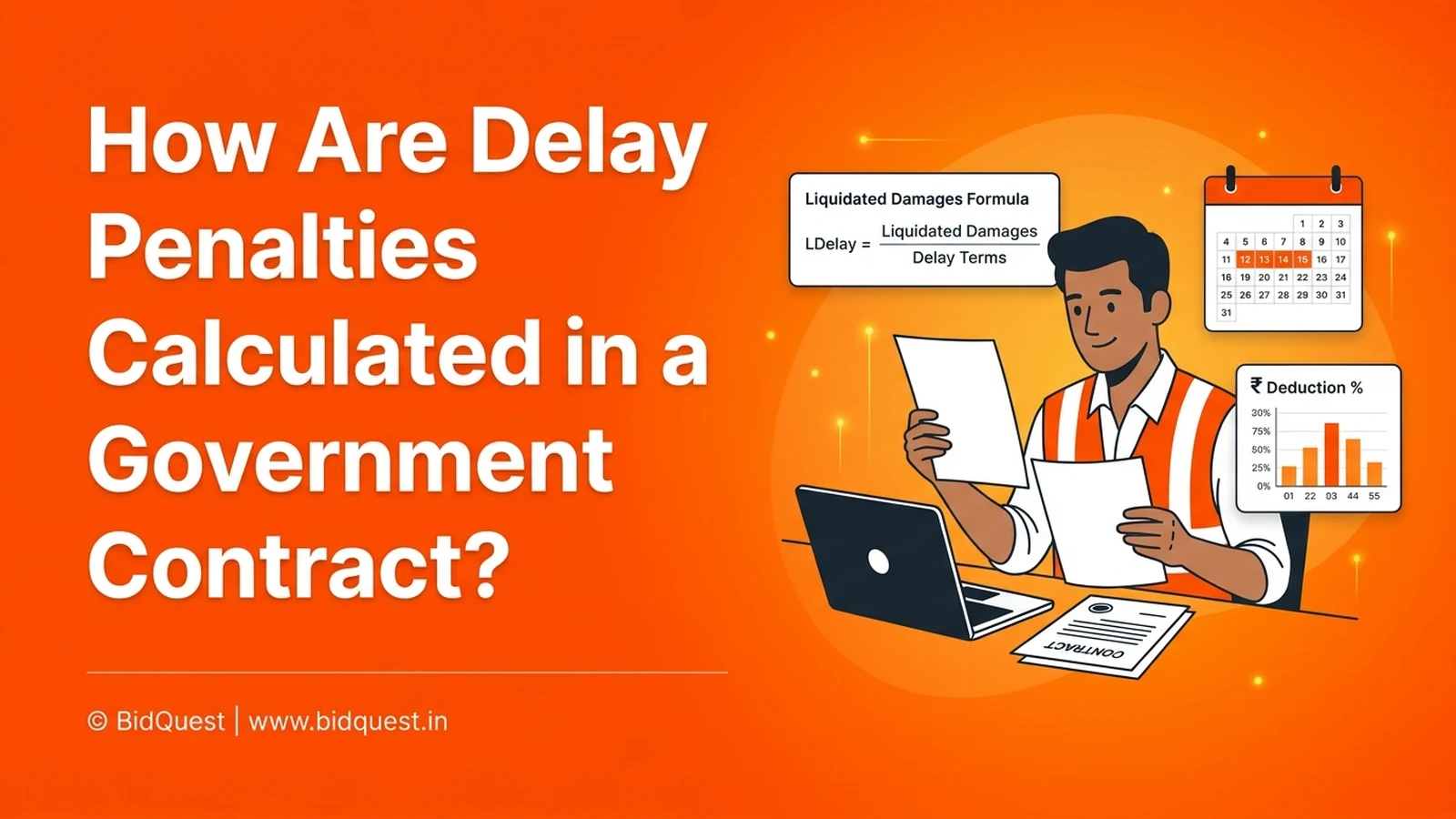
Calculate any delay-related amount using the actual contractual clause, applicable basis, period, cap, exclusions and authorised determination.
Read the guide
Follow the current official workflow for selecting or preparing a response to the exact tender record.
Read the guide
Identify the required certificate from the official portal guidance, choose an authorised issuing route and complete the provider's current verification process with accurate holder and.
Read the guide
Build a contract cash timeline covering securities, supplier payments, wages, logistics and receipts under the actual acceptance and billing terms.
Read the guide
Use the official helpdesk details published by the actual portal and provide the tender reference, affected account or stage, precise error and relevant timing.
Read the guide
Calculate the full expected delivery cost on a consistent basis, then distinguish revenue, contribution, overhead and the margin measure you intend to use.
Read the guide
Use the actual portal's current profile-update guidance and establish whether the change corrects an entry, reflects a legitimate business update or concerns another legal entity.
Read the guide
Compare the official response record with an approved attachment index, checking filenames, relevant versions and any available preview or receipt details.
Read the guide
Use the official tender's status, results or award record and the buyer's verified route, searching with the correct procurement identity.
Read the guide
Prepare the payment claim using the contract's actual measurement, acceptance, invoice and supporting-document provisions.
Read the guide
Normalise the old award and new requirement for item configuration, quantity, taxes, delivery, service period and included obligations before drawing a price conclusion.
Read the guide
Locate the official acknowledgement or bid summary produced by the current completed submission process and retain it with the released offer.
Read the guide
Open the correct official tender record and download the available notice, work-item documents, schedules and amendments.
Read the guide
Review the actual contract change, security wording and required new dates or amount before asking the bank for an extension.
Read the guide
Prepare a line-by-line response to the actual requirement, naming the offered configuration and citing the relevant supporting document or explanation.
Read the guide
Work on a controlled copy of the issued BOQ and follow the actual permitted-entry instructions.
Read the guide
Look for the amount in the official award or relevant result record, then establish whether it represents a quoted rate, evaluated total, awarded scope or contract amount.
Read the guide
Prepare a concise follow-up identifying the tender, bidder, security or payment reference, amount and the release event supported by the documents.
Read the guide
Request a genuine completion record from the appropriate authorised client contact, identifying the contract, work performed, relevant dates and information the client can accurately.
Read the guide
Use the token provider's verified driver and the tender portal's current official technical guidance for the actual operating system and device.
Read the guide
Build the technical bid from the buyer's requirements rather than a generic brochure.
Read the guide
Follow the current official account-enrolment and DSC-mapping instructions for the actual portal.
Read the guide
A tender company profile should explain the bidder's actual identity, relevant work, resources and capabilities in the format and scope the buyer requests.
Read the guide
Build the checklist from the complete issued package, not just the notice summary.
Read the guide
Prepare an undertaking from the exact statement and format requested, verifying that the bidder can truthfully make it.
Read the guide
Establish which quantities are firm, indicative, optional or variable under the actual contract, and how orders and payment will be measured.
Read the guide
Map each destination to its quantity, schedule, access, unloading, installation and support obligations before estimating a combined or location-specific rate.
Read the guide
Preserve the order, dispatch details, actual delivery attempt, location, time and lawfully available supporting evidence.
Read the guide
Use the current official account-recovery or support route for the correct procurement system, verifying the business and authorised user as required.
Read the guide
Reduce file size using a controlled method that preserves legibility, complete pages and required evidential features.
Read the guide
Use the verified CPPP enrolment route and current bidder instructions to create an account with accurate business and authorised-user details.
Read the guide
Renew or replace the DSC through an authorised route, then use each relevant portal's current procedure to update its certificate association.
Read the guide
Request time through the actual contract process, identifying the affected work, cause, dates, supporting evidence and realistic revised programme.
Read the guide
Use the procurement's permitted communication or representation route with the exact tender, bidder and stage reference.
Read the guide
Use the actual token provider's official recovery guidance for a blocked PIN and establish the authorised holder before taking action.
Read the guide
Reach the official portal independently and follow its current password-recovery procedure using the correct account and authorised contact.
Read the guide
Follow the actual self-attestation instructions, using the appropriate authorised person and genuine copies of the relevant records.
Read the guide
Use a trustworthy verification method to inspect the PDF's signature status, certificate information and whether the document has changed since signing.
Read the guide
Identify the procurement, official decision and exact disputed finding, then connect the relevant clause to the actual submitted evidence.
Read the guide
QCBS combines quality and cost according to the actual procurement's stated criteria, weights, scoring and qualification process.
Read the guide
Use the exact years and turnover definition specified in the tender, then calculate the average on that basis from the relevant supported accounts.
Read the guide
Calculate EMD only on the basis stated in the actual notice.
Read the guide
Evaluation duration varies with the procurement, required clarifications, approvals and other relevant circumstances.
Read the guide
Determine guarantee validity from the actual EMD and bid-validity provisions, including any required additional period and relevant amendments.
Read the guide
Request a current quotation from an authorised certificate provider for the exact configuration the portal requires.
Read the guide
There is no universal turnover requirement for every government tender.
Read the guide
Calculate liquidity exposure across actual and potential bids, including refundable EMD, guarantee collateral or facilities and post-award performance security where applicable.
Read the guide
Read who bears packing, insurance, freight, unloading and any delivery-site responsibilities under the actual contract.
Read the guide
A credit-limit letter and a solvency certificate can establish different financial facts.
Read the guide
A board resolution can be relevant authority evidence, but whether it is sufficient depends on the company's governance requirements and the particular tender's execution instructions.
Read the guide
A letter of acceptance and a work order can have different functions under the actual procurement.
Read the guide
A loss-making company must assess the actual tender's financial conditions rather than assume either automatic exclusion or unrestricted eligibility.
Read the guide
A work order can show that an assignment was issued, but may not establish that the work was completed, accepted or performed at the claimed value.
Read the guide
CPPP and GeM are different procurement systems with their own purposes, accounts and procedures.
Read the guide
EMD should not be described as one fixed percentage applying to every government tender.
Read the guide
Saving usually preserves work in progress, while submission releases the offer through the actual portal's required final process.
Read the guide
If current supported costs exceed the stated estimate, first check that both describe the same scope, units, taxes and quantities.
Read the guide
Quote on the exact basis requested in the financial schedule.
Read the guide
Use the tender's stated quotation and evaluation basis and the legally correct tax treatment for the actual supply.
Read the guide
Similar work is defined by the actual tender, not solely by a matching project title.
Read the guide
Compare the guarantee with the actual required wording and procurement identity, including bidder, beneficiary, reference, amount, currency, validity and claim conditions.
Read the guide
The tender's complete document list governs the response, not a universal checklist copied from another event.
Read the guide
Collect the actual contract-closeout evidence required for the assignment, including accepted delivery or measured work, approved changes, final billing and settlement records, handover.
Read the guide
Freezing a bid is the final-release action described in the relevant e-procurement workflow, distinct from merely preparing or uploading documents.
Read the guide
A non-responsive bid is one treated as failing the relevant procurement's responsiveness requirements.
Read the guide
Positive net worth should be interpreted using the definition, date and evidence required by the actual tender and relevant accounting basis.
Read the guide
Technically qualified means the bidder has passed the relevant technical assessment on the stated basis and stage, subject to the actual official record.
Read the guide
Use the file formats specified by the actual procurement portal and tender, including any issued financial template.
Read the guide
Expiry after submission should be assessed using the actual signature, portal and tender requirements rather than a universal assumption that every earlier bid becomes invalid or.
Read the guide
The treatment of a mismatch between unit rate and total depends on the actual tender's arithmetic-correction and evaluation provisions.
Read the guide
One received bid does not alone establish the final decision.
Read the guide
Record the agreed site-handover requirement, actual availability and resulting effect on the programme and resources.
Read the guide
Explain the client's name change with genuine authoritative records linking the historical project documentation to the current entity.
Read the guide
Review costs across bid preparation, mobilisation, delivery, acceptance, support and closure rather than the visible purchase or labour rate alone.
Read the guide
Reconcile the difference using the actual records, accounting periods and definitions before treating either figure as automatically wrong.
Read the guide
A bid opening report records the information the relevant system and process expose at that stage.
Read the guide
A bank solvency certificate is the bank-issued evidence described by the relevant tender, on the scope and conditions the bank actually certifies.
Read the guide
A bid securing declaration is the statement and commitment permitted or required in place of monetary security under the particular procurement arrangements.
Read the guide
A BOQ is the bill of quantities or financial schedule used to describe priced items on the basis specified by the procurement.
Read the guide
A CA turnover certificate should address the financial measure, entity and period requested by the tender, supported by the relevant records and professional verification.
Read the guide
The defect liability period and its end conditions come from the actual contract, including the relevant start event, covered obligations and closure process.
Read the guide
A deviation statement identifies differences between the offered position and the required terms or specifications, using the actual procurement's permitted format and process.
Read the guide
A manufacturer authorisation form provides the relationship and commitments specified by the procurement, commonly linking the actual OEM, bidder, offered goods and relevant support.
Read the guide
A non-blacklisting or non-debarment declaration should answer the scope, entities, authorities and period requested by the actual tender.
Read the guide
A price-escalation clause establishes how specified changes can affect payment on the actual contract basis.
Read the guide
A tender acceptance letter commonly confirms the bidder's acceptance of specified procurement terms in the manner requested.
Read the guide
A tender cover groups response material according to the actual submission instructions, which may separate technical, financial or other components.
Read the guide
An authorised-signatory letter records a person's authority to act for the bidder within the relevant scope, but its sufficiency depends on the entity's governing arrangements and tender.
Read the guide
An electronic bank guarantee should be issued and verified through the actual arrangements accepted by the procurement and relevant financial institutions.
Read the guide
An insurance surety bond is a security instrument whose acceptability and scope must fit the actual procurement and applicable framework.
Read the guide
An SFMS-related requirement concerns the banking verification or messaging arrangement specified for the security.
Read the guide
EMD is the bid-security amount or arrangement required by the particular procurement to address specified bidding risks.
Read the guide
My Documents is a reusable document-storage facility described in relevant bidder guidance, but stored files still need to be correctly selected and attached as required for the event.
Read the guide
The claim period concerns the instrument's actual provisions for making a claim and should be read alongside, rather than confused with, its validity and underlying contract obligations.
Read the guide
JV and consortium labels describe collaboration arrangements whose actual meaning and procurement treatment depend on the documents and applicable law.
Read the guide
EMD normally concerns security during the bidding process, while a security deposit can describe a different contractual security depending on the actual documents.
Read the guide
EMD and performance security address different stages and obligations under the actual procurement.
Read the guide
Inspection checks specified aspects of goods or work, while final acceptance establishes the status defined by the actual contract and authorised process.
Read the guide
Item-rate, percentage-rate and lump-sum arrangements use different pricing and measurement bases under their actual documents.
Read the guide
L1, L2 and L3 commonly describe relative price positions on the evaluation basis used in the event.
Read the guide
Liquidated damages and a fine should not be treated as interchangeable labels without examining the actual clause and legal basis.
Read the guide
QCBS and LCS are different evaluation approaches whose actual application comes from the tender.
Read the guide
A signing certificate supports digital signing, while an encryption certificate concerns the relevant encryption function.
Read the guide
Technical evaluation assesses the relevant qualification and proposed solution on the basis stated in the tender, while financial evaluation compares commercial offers under its.
Read the guide
A tender fee is generally a charge on the stated participation or document basis, while EMD is a security with its own refund and risk conditions.
Read the guide
Use the required covering-letter format where one is issued.
Read the guide
Identify the exact document, jurisdiction, execution requirements and tender instructions before purchasing stamp paper or arranging an equivalent permitted process.
Read the guide
Clarify who made the request, whether that person has authority and what exact change is proposed.
Read the guide
Preserve the exact error, time, tender reference and relevant submission evidence, then contact the official helpdesk through its verified route promptly.
Read the guide
Record the exact restrictive condition, its practical effect and the factual basis for your concern.
Read the guide
Preserve the bank debit, transaction reference, tender details, time and portal message, then check the official payment-status and support process.
Read the guide
Record the actual condition, affected items and quantities at the relevant handover, preserving packaging, dispatch, carrier and other required evidence.
Read the guide
Identify the exact specification gap and its consequence before deciding whether to bid.
Read the guide
Treat a suspicious certificate as a specific verification issue, not established fraud without evidence.
Read the guide
Treat loss of a DSC token as an access and credential-control incident.
Read the guide
A protected BOQ may intentionally limit editing to permitted cells.
Read the guide
Read the complete pricing instructions and clarifications to establish whether the required amount includes GST or follows another stated basis.
Read the guide
Reconcile the expected amount with the actual remittance and identify the deduction's stated basis.
Read the guide
A price that appears very low should be examined on a comparable scope, unit, tax and quantity basis before drawing a conclusion.
Read the guide
Identify the exact differences between the annexures and the material effect on the offer.
Read the guide
Verify the official award and compare its scope, quantity, price, schedule and incorporated terms with the approved offer.
Read the guide
Review a lost tender by separating official findings, credible feedback and internal hypotheses.
Read the guide
Test the supported device, browser, token, certificate, account mapping, signing utility, required file formats and payment or submission steps well before closing.
Read the guide
Forfeiture depends on the events and procedure specified by the applicable tender and governing framework.
Read the guide
Release depends on the actual contract and instrument conditions, including completion, acceptance and any continuing obligations relevant to the security.
Read the guide
Check whether the actual procurement requires a power of attorney and what form, scope, execution and supporting authority it specifies.
Read the guide
Use the applicable procurement's release provisions and actual bidder status to determine when EMD should be returned.
Read the guide
Use the issuer eligibility specified in the actual tender and applicable framework rather than an assumed universal list.
Read the guide
Use the browser and version supported by the current official portal and signing-tool guidance, considering the actual operating system and token configuration.
Read the guide
Use the exact DSC type specified by the current official tender portal and procurement instructions.
Read the guide
Determine the appropriate HSN or SAC treatment from the actual goods or services and applicable current tax provisions, using competent tax advice for consequential classification.
Read the guide
Retain originals and authoritative digital records supporting the submitted qualifications, signatures, product evidence and commercial commitments, as required by the actual procurement.
Read the guide
Rejection can arise from the actual procurement's eligibility, document, technical, submission or commercial conditions.
Read the guide
Read the exact validation error and inspect the certificate's validity, holder identity, relevant function and portal mapping against current requirements.
Read the guide
Identify where the upload stops and preserve the exact message, file size, format and relevant environment information.
Read the guide
Identify the actual error and whether it concerns a required entry, unsupported format, calculation or altered workbook structure.
Read the guide
Check the exact failure stage and message, then distinguish file-format or integrity issues from certificate, utility and account problems.
Read the guide
A signing-utility port error should be diagnosed using the actual software's official guidance and exact local configuration.
Read the guide
Read the exact rejection message and compare the filename with the portal's current restrictions, including permitted characters, length or naming requirements.
Read the guide
Separate token detection from certificate validity and portal mapping.
Read the guide
Identify the exact utility required by the portal and check its official supported version, installation status and prerequisites.
Read the guide
Understand NIT, RFP, RFQ and EOI, identify what the buyer asks for at each stage, and prepare the right evidence without assuming an award.
Read the guide
Separate tender fees, processing charges and EMD, verify payment instructions, and build a payment register that prevents avoidable submission errors.
Read the guide
Organise EMD refund records, identify the release trigger, separate bank status from buyer action, and follow up with a clear evidence-backed request.
Read the guide
Prepare a tender bank guarantee with checks for purpose, beneficiary, amount, wording, validity, bank approval and submission evidence.
Read the guide
Compare a tender surety bond with other accepted securities using checks for acceptance, wording, underwriting, price, validity and financial exposure.
Read the guide
Review tender escalation clauses, index bases, eligible costs and claim evidence, with worked examples for fixed-price and variable-price decisions.
Read the guide
Test a low tender price against the full scope, prepare a reproducible cost model, and answer pricing questions with evidence rather than optimism.
Read the guide
Compare QCBS and least-cost selection, interpret the tender's scoring method, and prepare technical evidence and pricing with a worked example.
Read the guide
Evaluate government IT bids with a specification matrix, software licence review, integration dependencies, support model and acceptance plan.
Read the guide
Price housekeeping work using area, cleaning frequency, surfaces, staffing, consumables, equipment, supervision and acceptance evidence.
Read the guide
Review security tenders with checks for relevant licensing, shift coverage, training, supervision, incident records and a sustainable cost model.
Read the guide
Price vehicle-hiring tenders with checks for fleet requirements, kilometre and hour limits, drivers, replacements, maintenance and usage evidence.
Read the guide
Review hospital supply bids with product-specific regulatory checks, specification evidence, shelf life, storage, traceability and acceptance planning.
Read the guide
Evaluate AMC tenders with an asset register, comprehensive-scope check, support model, spare-parts estimate and acceptance evidence plan.
Read the guide
Follow a practical CPPP tender submission workflow: registration, DSC readiness, bid covers, BOQ checks, upload, final confirmation and acknowledgement.
Read the guide
Learn a safe BOQ Excel workflow for Indian tenders: protect the template, understand units and taxes, review formulas and upload the correct priced file.
Read the guide
Organise technical tender documents using a clause-by-clause checklist for qualifications, specifications, certificates, declarations and submission covers.
Read the guide
Use this works tender site visit checklist to inspect access, utilities, quantities, safety and site constraints before quoting a government works contract.
Read the guide
Understand bid validity, submission deadlines, extension requests and commercial risks before agreeing to keep a government tender offer open.
Read the guide
Review JV and consortium eligibility, lead partner roles, experience evidence, liability and bid documentation before relying on partner credentials.
Read the guide
Review Delhi manpower tender staffing scope, shifts, relievers, wage assumptions, EPF evidence, service levels and bid pricing before committing.
Read the guide
Understand DSC issuance, authorised signatories, certificate validity, secure key handling and portal checks before electronic tender submission.
Read the guide
Read service-level metrics, delay damages, deduction clauses, cure periods and evidence requirements before quoting an Indian government service tender.
Read the guide
Write precise pre-bid clarification questions with clause references, a ready-to-adapt question table, and a response tracking workflow.
Read the guide
Learn how to read government tender documents in India: NIT, eligibility, technical specifications, BOQ, EMD, evaluation, corrigenda and submission checklist.
Read the guide