SYSTEM // LOADING
BIDQUEST // 2026
GRID // 1280px
BIDQUEST // 2026
Zero manual search • 100% Free
Reconcile the expected amount with the actual remittance and identify the deduction's stated basis.

Compare the actual award with the accepted offer and identify prerequisites for starting work, ordering materials and invoicing. Allocate responsibility for sourcing, site access, technical decisions, evidence and cash. A favourable result should not obscure an altered scope or missing approval. Establish what the buyer provides and what the contractor must arrange, with competent review of consequential safety, technical and contractual requirements.
Manage changes through the required authority and preserve original and amended positions. Requests, verbal instructions and approved variations are different records. The same distinction applies to a delay fact, extension request and authorised new completion date. Keep measurement, acceptance, payment and continuing support obligations connected to actual evidence. A generic complete status can conceal remaining defects, an unpaid balance or a security still outstanding. Track those items through handover and closure instead of assuming a final invoice extinguishes every obligation.
A fictional contractor is ready to mobilise, but the promised site is not available. It records the actual access position and notifies the authorised owner through the agreement's process. It assesses resources and programme effects without assuming automatic compensation. This example does not determine a real claim or entitlement. It shows why factual dependency evidence and the later contractual decision should remain distinct, allowing the business to respond responsibly without inventing an amendment or waiving an issue informally.
| Question | Evidence to review |
|---|---|
| Commitment | Actual award, authority and incorporated terms |
| Performance | Resources, programme and verified dependencies |
| Change | Required instruction, approval and commercial effect |
| Closure | Accepted outputs, settlement and continuing obligations |
Keep the receiving team informed of unresolved conditions and the next authorised action. A technically completed activity, paid invoice or returned document can be important evidence while still answering a narrower question than full commercial and contractual closure.
Record the agreed site-handover requirement, actual availability and resulting effect on the programme and resources. Notify the appropriate authorised party through the contract's prescribed process and seek a supported direction. Keep factual evidence of access, idle resources and affected tasks without assuming every delay creates an automatic compensation entitlement. Review mitigation, extension and cost provisions with competent owners. Do not alter the original schedule retrospectively to hide the dependency or begin unrelated work without authority. A clear record separates the operational fact of delayed access from the contractual decision about time, payment or responsibility that must be assessed under the actual agreement.
Identify the stated reason for refusal and preserve the order, dispatch, delivery attempt and product evidence. Distinguish wrong goods, visible damage, missing documents, site unavailability and a disputed requirement; they call for different responses. Use the permitted GeM order and communication process and obtain competent review where technical acceptance is disputed. Do not treat a delivery attempt as completed acceptance or return the goods without considering custody and contract conditions. Record storage, transport and next actions accurately. A factual response should establish what was offered, what arrived and which authorised decision is needed, rather than relying on accusations or informal promises about payment.
Early termination depends on the actual agreement, applicable framework, stated ground and authorised procedure. Distinguish termination for convenience from default or other contractual events rather than assume one consequence fits all. Preserve notices, performance evidence, committed costs and remaining work and obtain appropriate advice where exposure matters. Follow legitimate instructions on stopping, safeguarding or handing over work while keeping unresolved payment and liability questions explicit. A portal status change does not necessarily settle every commercial issue. The contractor should establish what ended, what continues and which closure process applies, instead of relying on an informal assurance that cancellation automatically removes all obligations.
Preserve the order, dispatch details, actual delivery attempt, location, time and lawfully available supporting evidence. Identify why receipt was not signed and use the authorised buyer communication and contract process promptly. Do not manufacture a delivery signature or report final acceptance from a carrier's arrival alone. Wrong location, unavailable consignee, damage and disputed conformity require different action. Keep custody and storage responsibility clear while seeking direction. A factual record can support later review, but does not automatically replace the acceptance or receipt document required by the contract. The team should distinguish goods attempted, physically received and accepted before billing or closing the obligation.
Quantity changes depend on the contract's actual variation or option provisions, including permitted limits, rates, timing and authority. Do not assume every buyer request is automatically binding at the original rate or that all additional units justify a new price. Compare the instruction with the agreement and assess supply, logistics and cash consequences before approval. Preserve the authorised order or amendment and update the remaining balance. Where the request exceeds or conflicts with the stated arrangement, obtain an appropriate resolution rather than deliver first and assume the invoice will be accepted. A quantity spreadsheet shows arithmetic, not contractual authority for a changed commitment.
Record the actual condition, affected items and quantities at the relevant handover, preserving packaging, dispatch, carrier and other required evidence. Follow the contract and insurer's applicable notification and claims processes with competent owners. Do not assume transit damage automatically transfers all responsibility to the carrier or allows the buyer to be invoiced for accepted goods. Establish custody, delivery terms and any replacement obligation. Avoid disposing of evidence before the relevant authorised review. A complete file links the damaged consignment to the contract and policy while keeping the supplier's delivery duty separate from the later outcome of a transport or insurance claim.
First establish whether payment is due under the applicable terms and whether acceptance, invoice and supporting requirements are complete. Identify the actual pending or disputed point and follow up through the permitted order, finance or grievance route with evidence. Preserve amounts, dates and responses. Do not assume every delay has the same cause or that an agent can release money for a commission. Where statutory remedies may be relevant, obtain appropriate advice about eligibility, procedure and the actual claim. Continue cash planning realistically while the matter is unresolved, distinguishing contractual follow-up from a formal legal remedy rather than presenting either as a guaranteed immediate recovery.
Prepare the payment claim using the contract's actual measurement, acceptance, invoice and supporting-document provisions. Connect the amount to authorised work, accepted quantities and applicable rates, with approved variations shown separately. Check tax and deduction treatment with competent owners where needed. Do not assume physical completion alone establishes every billing prerequisite. Preserve the submitted claim and acknowledgement and track pending certification or dispute items explicitly. A reproducible claim helps the buyer and supplier identify what is due and what requires further action, rather than rely on an unexplained total or an internal completion statement whose commercial basis has not been established.
The defect liability period and its end conditions come from the actual contract, including the relevant start event, covered obligations and closure process. Do not assume it begins at dispatch or ends on a remembered anniversary. Track acceptance records, defect notifications, rectification and any continuing requirements accurately. A warranty and a defect-liability obligation may not be identical. Preserve the evidence supporting completion and request required closure or security release through authorised routes. The business should understand which obligations genuinely remain, rather than treat an elapsed date or final invoice as proof that every repair, document and contractual liability has been extinguished.
Inspection checks specified aspects of goods or work, while final acceptance establishes the status defined by the actual contract and authorised process. A passing test, dispatch clearance or physical receipt may be relevant evidence without completing every acceptance condition. Identify what was inspected, by whom, on which basis and what remains outstanding. Preserve results and unresolved defects rather than treat one favourable record as a universal approval. The finance and delivery teams should use the same supported completion status. This distinction prevents premature billing or closure and avoids overlooking documentation, integrated testing or other obligations the buyer requires before accepting the contracted outcome.
These official resources are starting points for checking the applicable process. Confirm the current notice, attachments, corrigenda and portal instructions for your own opportunity. A general explanation cannot establish eligibility, an exemption or acceptance for a particular bid. Historical manuals and registration guides may differ from a current screen or contract.
Explore opportunities with BidQuest. Compare a suitable notice with your documented capability before committing money, approving a price or submitting a bid.
Department of Expenditure. Accessed 7 Nov 2026.
Central Public Procurement Portal. Accessed 7 Nov 2026.
Government e Marketplace. Accessed 7 Nov 2026.
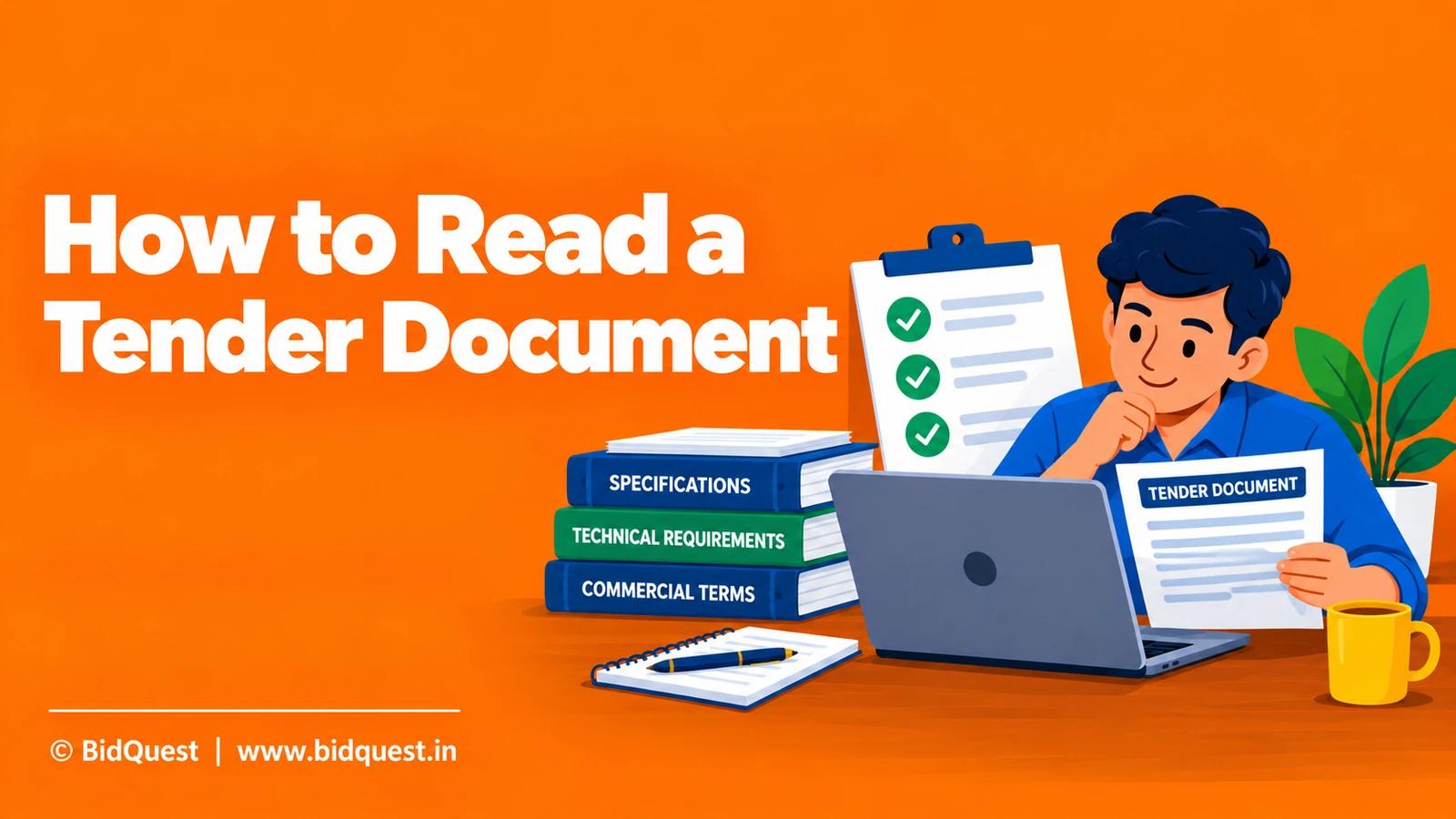
Learn how to read government tender documents in India: NIT, eligibility, technical specifications, BOQ, EMD, evaluation, corrigenda and submission checklist.
Read the guide
Learn how Indian MSMEs and contractors can find government tenders on CPPP, GeM and state portals, shortlist relevant notices and track corrigenda.
Read the guide
Provisional accounts are acceptable only if the applicable tender requirements permit them on the relevant basis.
Read the guide