SYSTEM // LOADING
BIDQUEST // 2026
GRID // 1280px
BIDQUEST // 2026
Zero manual search • 100% Free
MAKE THE DECISION
Bid or no-bid methods, tender analysis, workflow design, and responsible use of AI during review.
Government contracts can be commercially viable when the accepted price covers the complete obligation, financing needs and allocated risks.
Read the guide
WhatsApp alerts can be useful for discovery, but reliability depends on their source, freshness and how the recipient verifies them.
Read the guide
A freelancer can consider service tenders accepting the proposed contracting form and supported by the required professional, financial and experience evidence.
Read the guide
A home-based business can examine opportunities compatible with its lawful operations and the buyer's premises conditions.
Read the guide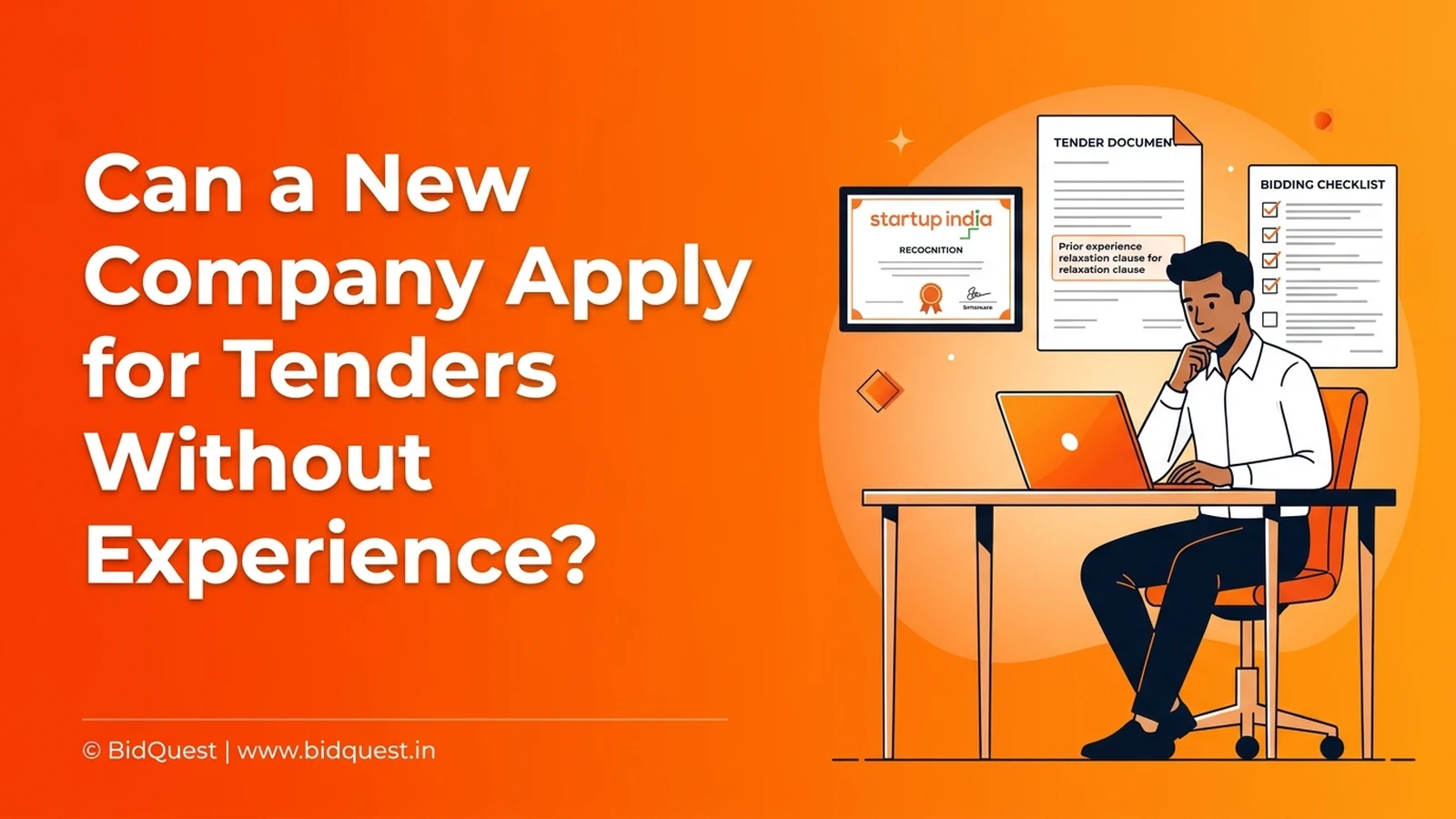
A new company can pursue opportunities whose conditions it meets, including an expressly applicable relaxation for eligible startups or MSEs.
Read the guide
A partnership need not assume it must incorporate a company before considering every tender.
Read the guide
A small printing business can pursue procurements whose qualifications, specifications, capacity and schedule it genuinely meets.
Read the guide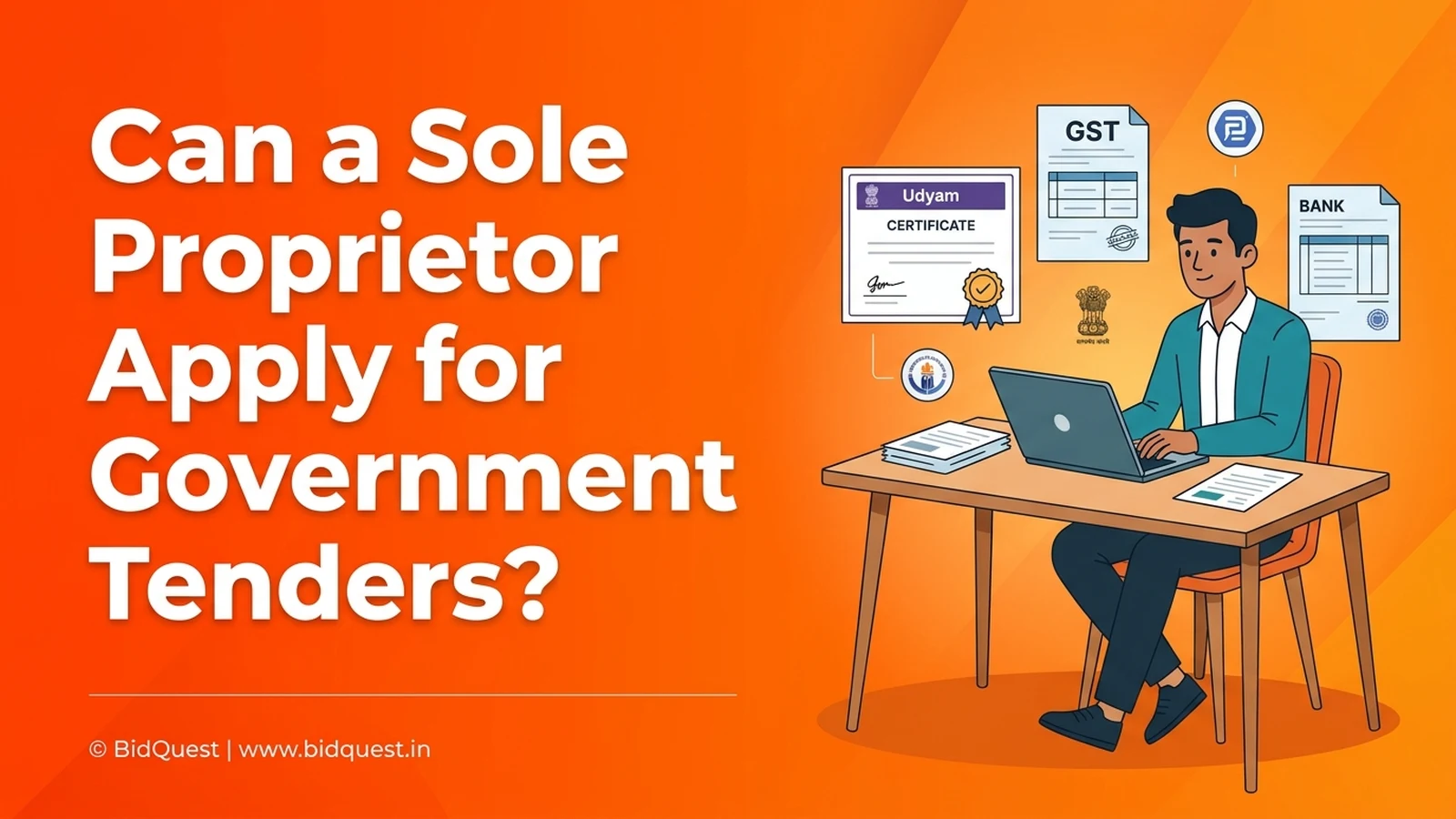
A sole proprietor can consider tenders that accept the relevant form, subject to the actual qualification and regulatory conditions.
Read the guide
Student status does not itself establish or remove tender eligibility.
Read the guide
A trader should establish whether the notice permits dealers or resellers and whether a particular benefit is restricted to manufacturers.
Read the guide
A trust or NGO must check that the opportunity accepts its legal form and that the activity fits its governing objects, permissions and applicable obligations.
Read the guide
AI can propose a comparison between two authorised document versions, but the reported differences need source verification and a completeness check.
Read the guide
Treat any AI-assisted BOQ work as a controlled proposal requiring human and file-integrity verification.
Read the guide
AI can assist with relevant search terms, classification and review workflows, but its usefulness depends on the actual tool, available data and verification process.
Read the guide
Use AI to draft a requirement-to-evidence index from an authorised complete document set, asking it to identify source locations and uncertainty.
Read the guide
AI can help turn a genuine ambiguity into a focused draft question when given authorised relevant text and context.
Read the guide
AI can help extract candidate eligibility conditions, but the output needs verification against the actual text, definitions, annexures and amendments.
Read the guide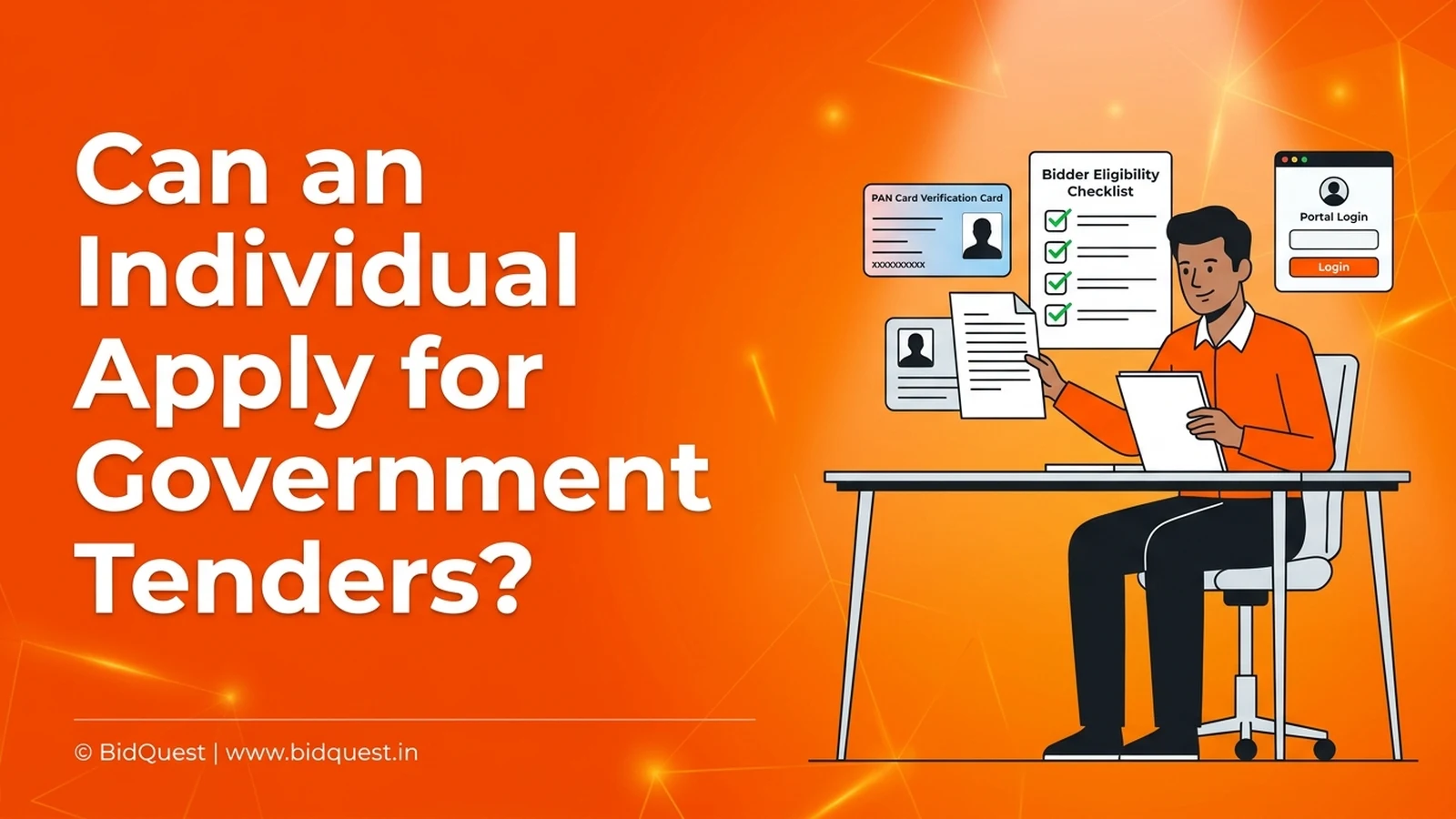
An individual must check whether the tender accepts that bidder type and whether the person can lawfully enter and perform the contract.
Read the guide
An LLP can review opportunities accepting its bidder form, but incorporation alone does not establish tender qualification.
Read the guide
No supplier should treat a private promise of guaranteed government award as a substitute for the actual procurement and authorised decision.
Read the guide
Government employees should not treat tendering as an unrestricted side-business activity.
Read the guide
Participation without GST registration depends on the bidder's actual tax position, the proposed supply and the procurement conditions.
Read the guide
A business can examine tenders outside its home state, subject to the event's eligibility, registration, tax and performance requirements.
Read the guide
A separate commercial office is not a universal requirement for every tender.
Read the guide
A tender business does not inherently require a broker.
Read the guide
You can investigate opportunities through publicly accessible official notices and relevant procurement portals without assuming that a commercial tender subscription is compulsory.
Read the guide
Multiple bids are manageable when the business can prepare them properly and potentially perform all resulting awards.
Read the guide
A privately employed person should examine their employment agreement, outside-work policy, confidentiality duties and conflicts before running a tender business alongside the job.
Read the guide
Supplying goods made by another company can be a normal arrangement when the tender allows it and the bidder meets its conditions.
Read the guide
Before uploading, check that disclosure to the chosen external AI service is permitted under the document, buyer conditions, organisational rules and relevant duties.
Read the guide
Lawfully available tender results can inform prospect research by identifying actual awarded work and relevant suppliers or contractors.
Read the guide
Check each actual procurement system's enrolment and account rules rather than assume one registration covers every state or that every similar portal requires an entirely new legal.
Read the guide
A separate company is not automatically needed for each product or service category.
Read the guide
EPF and ESI requirements must be assessed under the applicable current law, workforce and actual tender, not a universal rule copied from another manpower contract.
Read the guide
A small software company should pursue assignments whose entity, experience, staffing and technical requirements it can support.
Read the guide
A tender winner can be a potential customer or partner, but an award record does not automatically establish a lawful subcontracting opportunity or guarantee payment to a secondary supplier.
Read the guide
Attaching a car to a department requires a genuine authorised hiring arrangement, not a broker's promise based on the buyer's name.
Read the guide
Check the notice through an independently located official source and verify the buyer's identity, procurement reference and authorised communication route.
Read the guide
Assess the manpower tender's actual roles, qualifications, deployment, attendance, replacement, supervision and reporting requirements.
Read the guide
Use Karnataka's current official KPPP guidance for the actual tender rather than an old e-procurement tutorial whose screens or fees may differ.
Read the guide
Follow GAIL's current verified official vendor-information and application route for the actual category and entity.
Read the guide
Review the actual canteen arrangement, including premises, equipment, utilities, menu, demand, operating hours and revenue or payment model.
Read the guide
Review the road tender's actual construction or maintenance model, section scope, quantities, programme and technical requirements with competent owners.
Read the guide
Use the verified Jammu and Kashmir official procurement route identified by the issuing authority and check the actual tender identity and complete package.
Read the guide
For MES opportunities, use the actual official tender route and establish whether contractor enlistment, a particular class, relevant category or another stated eligibility basis applies.
Read the guide
Use RDSO's current official guidance for the exact product or approval category and identify the relevant application, evidence and assessment process.
Read the guide
Read the uniform tender's fabric, construction, sizing, samples, quantity and delivery requirements before asking suppliers for a quote.
Read the guide
Read the security-service tender's actual site, risk, coverage, personnel, supervision, equipment and replacement duties.
Read the guide
Use Telangana's verified official e-procurement service and its current registration, DSC and technical guidance for the actual opportunity.
Read the guide
Use Jharkhand's official procurement site to locate the actual tender and its complete documents and corrigenda.
Read the guide
Use the current official Haryana procurement route identified by the actual notice and verify the correct buyer and tender identity.
Read the guide
Define the actual waste stream, collection scope, geography, measurement and destination responsibility before bidding.
Read the guide
Review website-development tenders for actual content, design, accessibility, hosting, migration, integration, testing and maintenance obligations.
Read the guide
Provide only content you are authorised to share and ask for an explanation tied to the exact excerpt, document version and clause.
Read the guide
Reach GeM through its verified official route and distinguish free seller registration from optional professional services or separately applicable activities.
Read the guide
Set a repeatable routine covering discovery, qualification and change checking, with named ownership and an achievable review period.
Read the guide
Find the correct UP official tender record using its ID, reference and issuing organisation, then review the available status or result stages.
Read the guide
Search the buyer's official notices and relevant portal for a new invitation, comparing its reference, scope, quantities and dates with the cancelled event.
Read the guide
Check the tender's current status and submission time on the authoritative procurement source, including relevant corrigenda.
Read the guide
Create a claim-to-source review for material statements, recording the extracted fact, document version, clause or table and human conclusion.
Read the guide
Choose a CPWD class and category using the current official enlistment framework and the business's genuine credentials and intended work.
Read the guide
Compare services against the actual work your team needs: relevant discovery, source traceability, amendment handling, usable filters, document access, support and permitted exports.
Read the guide
Choose a first tender by matching real evidence, resources and cash capacity to a clearly understood obligation.
Read the guide
Find Goa's current official e-procurement route through verified state or issuing-organisation information and follow the notice's actual submission instructions.
Read the guide
Find the Tamil Nadu official procurement route through a verified government link and search using relevant product, department and location information.
Read the guide
Locate Punjab's official procurement route and the exact notice using verified government or buyer information.
Read the guide
Search verified sources by the actual work category, buyer and project area, then screen scope and qualification before focusing on estimated value.
Read the guide
Locate Coal India and relevant subsidiary opportunities through verified official procurement routes, keeping the actual issuing entity and unit clear.
Read the guide
Search verified procurement sources using relevant computer, laptop and configuration terms and confirm each official notice before preparing an offer.
Read the guide
Assess the actual furniture schedules, dimensions, materials, finish, layout, mock-up and assembly obligations.
Read the guide
Search government-bank procurement through verified bank websites and authorised publication or bidding routes, using the actual institution and regional unit where relevant.
Read the guide
Read the actual event deliverables, quantities, venue interfaces, production design, permissions and buyer-provided facilities before quoting a package.
Read the guide
Search relevant food-supply categories through verified procurement sources, then check actual quality, grade, pack size, shelf life, sampling and delivery requirements.
Read the guide
Find verified solar opportunities using the actual supply, installation, EPC, O&M or commercial model relevant to the business.
Read the guide
Use the official Chhattisgarh procurement route relevant to the issuing authority and actual event, verifying it independently because older portal references may persist in search results.
Read the guide
Use the verified official defence procurement route identified by the issuing authority, distinguishing the portal record from any separate vendor, source or security requirement.
Read the guide
Use verified state, district or local-body publication routes to identify the actual Gram Panchayat procurement and responsible authority.
Read the guide
Search the official Himachal Pradesh procurement route relevant to your offering, using buyer, category and genuine work-location information.
Read the guide
Search official hospital and procurement sources for equipment the business can genuinely supply and support.
Read the guide
Use IOCL's verified official procurement information and the authorised route for the specific tender, identifying the relevant unit and supply or service category.
Read the guide
Find IRCTC opportunities through its verified procurement or authorised publication routes and read the actual category and service requirement.
Read the guide
Search the municipality's verified tender route and relevant official portal using the actual issuing body, category and work location.
Read the guide
Locate NHAI opportunities through verified official procurement or authorised publication routes and preserve the exact event identity.
Read the guide
Reach NTPC's verified official procurement and supplier-information routes and identify the relevant company or unit, category and event.
Read the guide
Look in the official archive, status record or buyer's document repository using the exact tender identity.
Read the guide
Find ONGC supplier and tender information through its verified official routes and the publication system specified for the relevant event.
Read the guide
Private-company tenders may be advertised on the company's verified procurement site, supplier portal, authorised marketplace or through a genuine invitation.
Read the guide
Build a targeted list of PSUs relevant to your offering and identify each one's verified procurement and vendor-information routes.
Read the guide
Search official railway procurement routes for products or services the business can genuinely provide, then assess the complete requirement rather than the title alone.
Read the guide
Find smaller opportunities by combining the product or service you can deliver with value filters and relevant buyer searches.
Read the guide
Use the official portal's status, results, archive or award section and the buyer's verified procurement route, referring to the original ID and reference.
Read the guide
Search by value only after establishing how much cash and capacity the business can commit.
Read the guide
Search the official portal's organisation or authority fields where available, and preserve the buyer's full name and relevant hierarchy.
Read the guide
Translate your product range into the words buyers use, including common names, technical terms, applications and appropriate category labels.
Read the guide
Locate Bihar's current official e-procurement service through verified government information rather than an old directory or a lookalike registration site.
Read the guide
Read the delivery or performance schedule, consignee information, site annexures and relevant special conditions in the official tender.
Read the guide
Procurement plans, budget announcements, approved projects, market consultations and EOIs can help identify potential future demand.
Read the guide
Find verified vehicle-hiring opportunities and identify the actual service: route, duty hours, vehicle category, kilometres, driver coverage, fuel and replacement obligations can.
Read the guide
Use official notification options or a suitable commercial service where available, selecting keywords, categories and locations that match your business.
Read the guide
Begin with official bidder manuals, public notices and carefully labelled historical examples.
Read the guide
Identify whether the MSTC event is a sale, procurement or another specific auction arrangement before applying a bidding strategy.
Read the guide
Use the current verified MP Tenders enrolment instructions and establish the correct bidder identity and authorised certificate arrangement.
Read the guide
Identify the current official PWD contractor-registration framework for the actual state and work category before applying.
Read the guide
Use the current official IREPS vendor or bidder guidance for the actual supplier role and procurement category.
Read the guide
Use BHEL's current verified supplier-registration guidance for the relevant unit and product or service category.
Read the guide
Use AAI's current verified vendor or procurement-information routes and identify the actual requirement and authorised event system.
Read the guide
Find Andhra Pradesh's current official procurement route through authoritative state or issuing-buyer information before entering credentials or paying.
Read the guide
Reach Assam's verified official tender service and consult its current enrolment, payment and technical guidance for the actual event.
Read the guide
Reach Delhi's official procurement route independently and review its current bidder-enrolment, account and certificate instructions.
Read the guide
Verify the current official nProcure and buyer route from authoritative government or issuing-organisation information before registering or paying.
Read the guide
Reach Kerala's current official e-tender route through a verified government source and review the applicable enrolment and technical instructions.
Read the guide
Locate Odisha's current official tender route through authoritative government links and review its bidder-enrolment and submission instructions.
Read the guide
Use Tripura's verified official procurement route and current enrolment and technical instructions for the business and authorised user.
Read the guide
Reach Maharashtra's current official procurement route through a verified government source and review its bidder-enrolment and technical guidance.
Read the guide
Use Uttarakhand's verified official procurement route and current bidder guidance, preparing accurate entity, contact and authorised-signature information.
Read the guide
Preserve the notice, messages, payment details and relevant source references without altering the evidence.
Read the guide
Use location searches to discover relevant work, then establish the actual performance or delivery point from the tender package.
Read the guide
Search using the exact official tender ID or buyer reference where the system supports it, and keep the two identifiers separate.
Read the guide
Start a government tender business by choosing something you can actually deliver, checking the buyer's eligibility conditions and preparing a consistent business identity.
Read the guide
Identify electrical tenders matching the business's actual licence, technical competence, resources and experience.
Read the guide
Begin by defining the facilities, areas, frequencies, operating windows and outcomes in the actual housekeeping tender.
Read the guide
Begin with the stationery categories and quantities the business can genuinely source, then identify verified government opportunities and read their complete conditions.
Read the guide
Use the West Bengal official system relevant to the particular tender, checking the ID, buyer and event source rather than assume all similarly named portals are interchangeable.
Read the guide
Verify the purchase order independently through the buyer's official procurement or authorised contact route, rather than using only the number supplied in the message.
Read the guide
Use the aggregator's reference to locate the official notice, then compare the tender ID, issuing authority, title, dates and complete document set.
Read the guide
There is no universal period for securing a first government contract.
Read the guide
No single starting-capital figure fits every tender business.
Read the guide
Free official sources may be enough for a focused business able to monitor relevant buyers and qualify notices consistently.
Read the guide
Private-security agency licensing should be assessed under the applicable PSARA framework, state implementation and the actual service arrangement.
Read the guide
PWD registration requirements depend on the actual state, department, work category and tender conditions.
Read the guide
IREPS registration concerns access to a procurement system, while railway vendor or source approval can address a particular product or capability requirement.
Read the guide
Vendor registration is not normally a guarantee of orders unless an actual authorised arrangement establishes a specific commitment.
Read the guide
Decide based on the specific preparation gap, complexity and resources available, rather than assume a first bid always requires a consultant.
Read the guide
Do not treat an advance commission demand as proof that a person can obtain a government order.
Read the guide
General conditions provide a standard contractual framework, while special conditions address requirements or changes relevant to the particular procurement.
Read the guide
Major risks include unsuitable pursuits, unsupported declarations, incomplete costing, cash shortfalls and failure to perform after award.
Read the guide
A corrigendum is an authorised change or correction associated with the procurement.
Read the guide
A tender executive commonly supports discovery, document review, qualification coordination, response preparation, submission tracking and records, according to the employer's actual.
Read the guide
Bid validity is the period during which the bidder's offer is intended to remain open on the applicable terms.
Read the guide
Empanelment places a supplier or professional on an approved list for the purposes defined by the buyer.
Read the guide
Estimated tender value is the buyer's stated planning or estimate figure on the basis described in the procurement.
Read the guide
Prequalification is an assessment of whether a prospective participant meets specified conditions before the relevant later procurement stage.
Read the guide
Scope of work describes the activities, outputs and responsibilities expected under the procurement.
Read the guide
A tender ID is an identifier used by a procurement system to distinguish a record.
Read the guide
A framework agreement sets terms for later procurement or call-offs under a defined arrangement.
Read the guide
A government tender is a documented process through which a public buyer invites and evaluates offers for a defined requirement.
Read the guide
A limited tender generally directs an enquiry to selected suppliers under the applicable procurement arrangements.
Read the guide
A rate contract establishes agreed rates and relevant terms for orders placed under the arrangement.
Read the guide
A single-tender or single-source route involves procurement from a particular source under the conditions of the applicable framework.
Read the guide
A turnkey contract generally places an integrated delivery responsibility on the contractor, but the actual documents determine what ready-for-use means and which interfaces remain with.
Read the guide
E-tendering uses an electronic system for relevant procurement activities, such as accessing documents, submitting offers and recording stages.
Read the guide
An open tender invites participation through the applicable public procurement route rather than limiting the invitation to a preselected list in the same way as a limited enquiry.
Read the guide
Establish the current official purpose and workflow of the relevant e-Gram Swaraj vendor-related arrangement before treating it as tender registration.
Read the guide
MES enlistment is the authority-specific contractor status and scope established through its applicable official rules and decision.
Read the guide
A tender often refers to the buyer's procurement invitation or the wider process, while a bid is the supplier's offer in response.
Read the guide
A tender is part of the procurement process; a contract establishes the parties' binding obligations when properly formed.
Read the guide
A quotation normally expresses a supplier's proposed price and associated terms, while a tender commonly describes a more structured invitation and response process.
Read the guide
A tender extension changes a relevant time limit within the existing process, while re-tendering generally involves a renewed invitation whose identity and conditions must be checked.
Read the guide
A portal tender ID identifies the system record, while a reference number often comes from the buyer's own numbering arrangement.
Read the guide
A purchase order commonly records an order for goods or defined services, while a work order often describes an instruction or award for specified work.
Read the guide
An EOI commonly seeks information or interest that helps a buyer identify potential participants or shape a later procurement, while an RFP requests proposals against a defined invitation.
Read the guide
An RFQ typically concentrates on obtaining quotations for a stated requirement, while an RFP often asks for a more developed proposal describing approach and commercial terms.
Read the guide
Tender search tools focus on discovering and organising opportunities, while bid-management tools can address preparation, evidence, tasks or approvals where those capabilities actually.
Read the guide
Tender value usually describes a figure associated with the procurement, such as an estimate, while contract value reflects the awarded or agreed commercial arrangement on its stated basis.
Read the guide
The fee should correspond to a defined service, such as screening, document organisation or support for a specific submission, with clear acceptance, revision and expense terms.
Read the guide
Before paying, verify the official notice, payment destination, applicable charge and your likely qualification.
Read the guide
Start with official procurement systems and the issuing organisation's verified tender route.
Read the guide
A beginner should select a small, relevant set of official sources rather than try to monitor every website in India.
Read the guide
The required labour licence or registration depends on the actual activity, location, workforce, current applicable legal framework and procurement conditions.
Read the guide
Electrical contractor, supervisor or other permission requirements depend on the actual jurisdiction, activity and procurement conditions.
Read the guide
Determine which Rajasthan system provides the information and which route the actual notice requires for submission.
Read the guide
Develop careful reading, spreadsheet basics, document organisation, clear communication and familiarity with the actual procurement workflows relevant to the employer.
Read the guide
Irrelevant alerts often come from broad words, ambiguous abbreviations, incorrect categories or locations that represent buyer offices rather than work sites.
Read the guide
A search result may label the buyer's headquarters, publication location or inferred administrative area instead of the actual performance site.
Read the guide
The same procurement can appear through official publication routes, aggregators and buyer websites, each using different internal tracking labels.
Read the guide
Search Maharashtra tenders, check current portal notices and payments, assess qualification and site delivery, and preserve final submission evidence.
Read the guide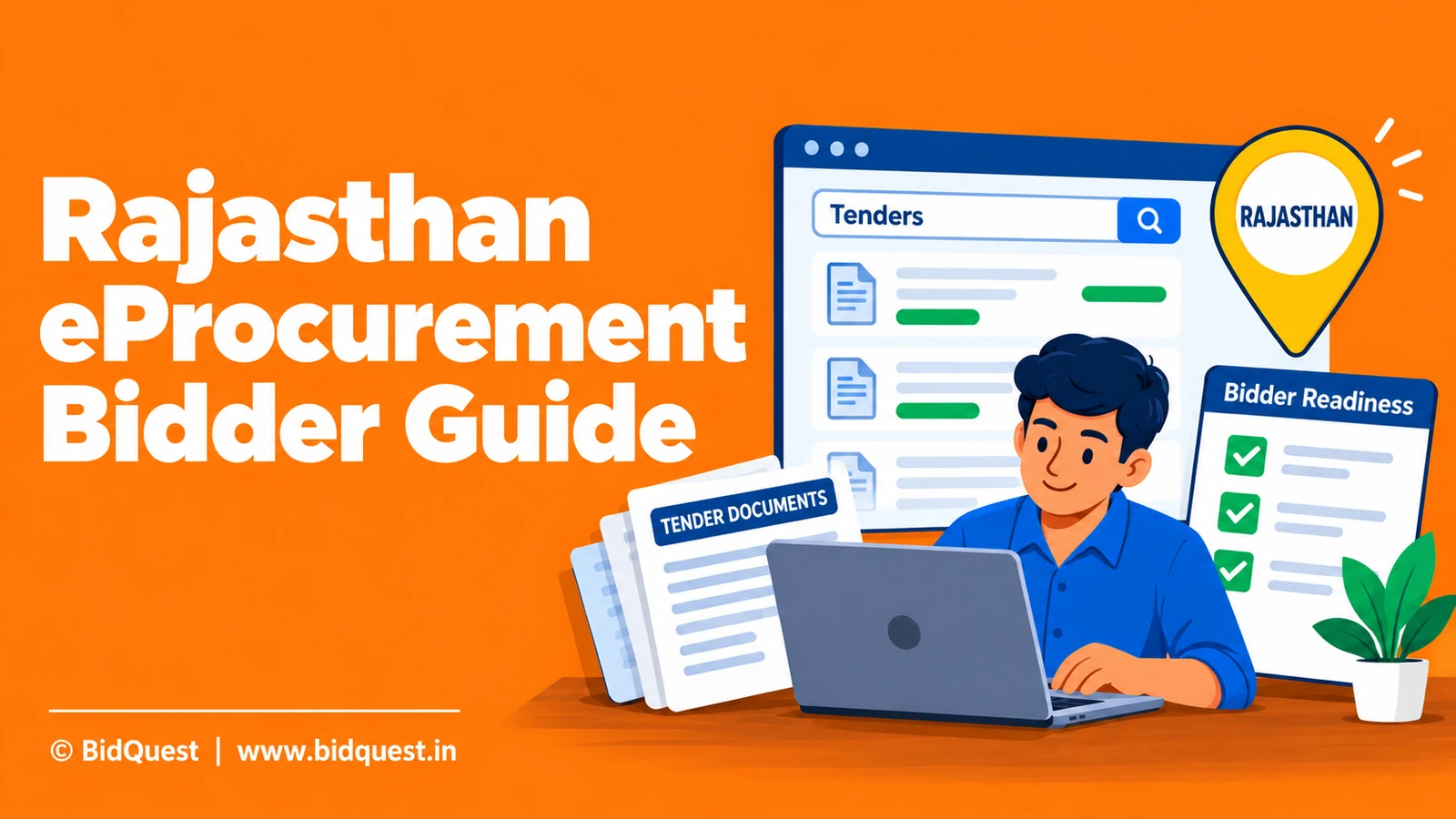
Find the correct Rajasthan procurement route, check SHPP transition notices, and prepare evidence, fees and submission records for the actual tender.
Read the guide
Connect Gujarat tender notices to the designated bidding system, verify nProcure instructions, and prepare a qualification and payment evidence checklist.
Read the guide
Search Haryana eTenders, map tender requirements to evidence, assess multi-site delivery, and verify signing, payments and final submission.
Read the guide
Prepare for Karnataka procurement by verifying the KPPP event, account access, evidence, delivery locations and current submission instructions.
Read the guide
Search Tamil Nadu tenders, check state and buyer-specific requirements, reconcile documents and amendments, and plan delivery and final submission.
Read the guide
Review railway tender routes, item approval conditions, inspection, technical evidence and delivery obligations before committing to a supplier bid.
Read the guide
Review municipal tenders with checks for work location, measurements, delivery resources, waste handling, acceptance and realistic working capital.
Read the guide
Understand tender corrigenda, distinguish extensions from technical changes, and maintain a change log so bids use current documents and BOQs.
Read the guide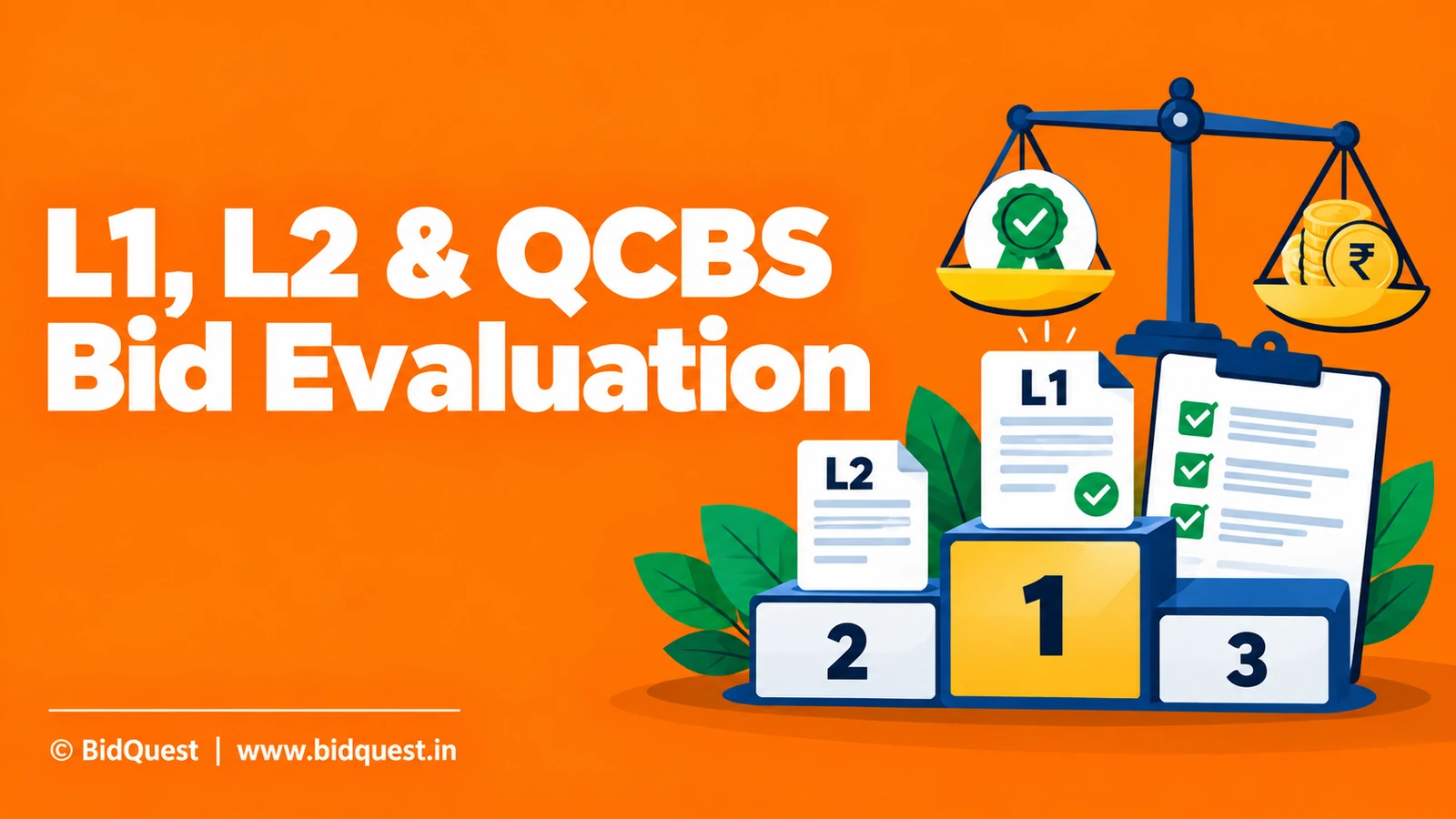
Understand L1 and L2 bidder ranking, techno-commercial responsiveness, QCBS basics and why the published evaluation method controls award outcomes.
Read the guide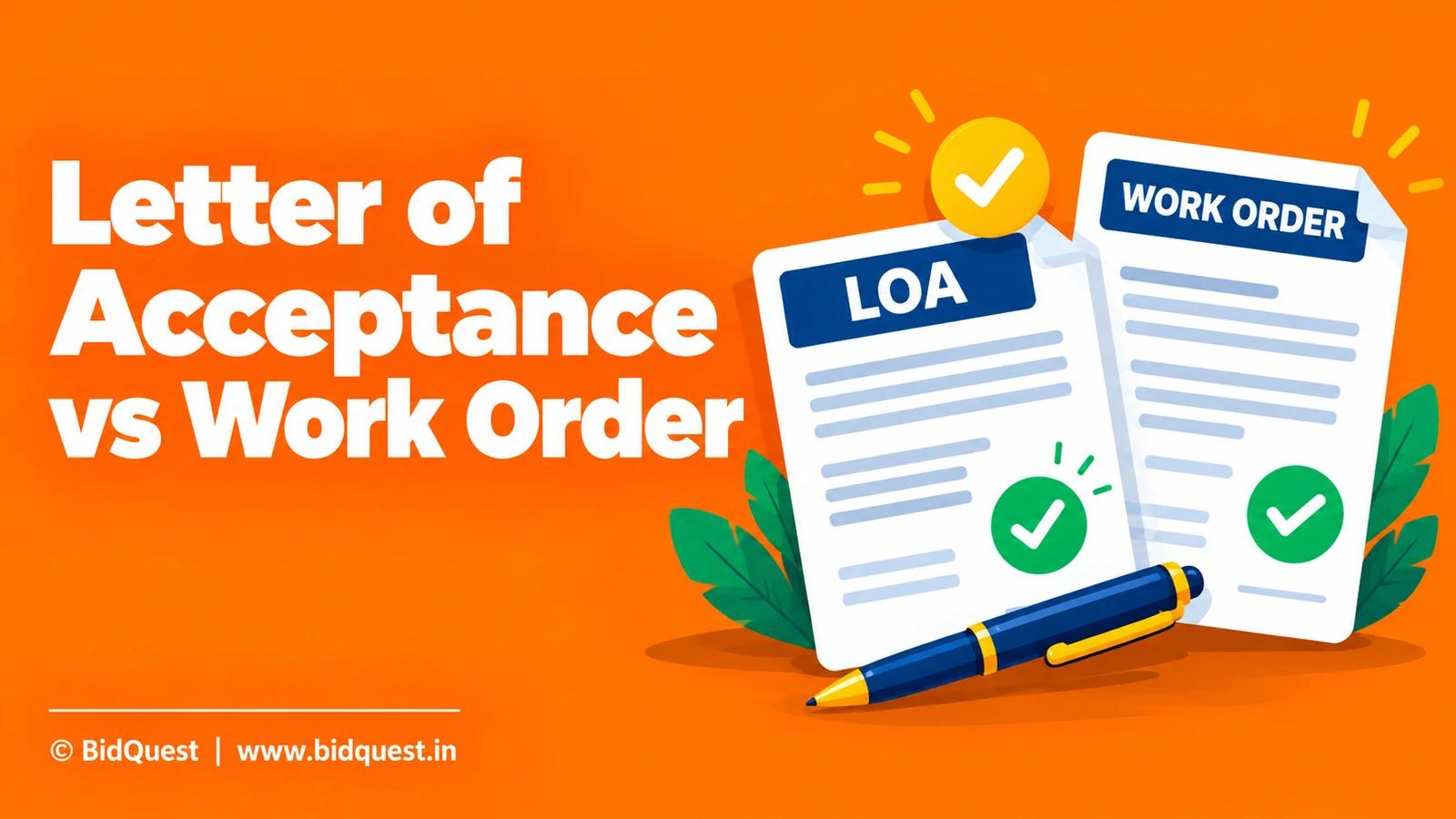
Understand the practical differences between an award notice, letter of acceptance, work order and signed contract in Indian procurement.
Read the guide
Understand rate contracts, framework agreements, call-off orders, quantity uncertainty and supplier margin risk in government procurement.
Read the guide
Use a weighted but transparent bid/no-bid worksheet to assess eligibility, capacity, margin, funding, deadline and contract risk before bidding.
Read the guide
Find Madhya Pradesh eProcurement notices using official search, organisation and location filters, then check documents, corrigenda and bid readiness.
Read the guide
Learn to navigate Uttar Pradesh official eProcurement notices, department and closing-date views, amendments, documents and online bidder readiness.
Read the guide
Learn how Indian MSMEs and contractors can find government tenders on CPPP, GeM and state portals, shortlist relevant notices and track corrigenda.
Read the guide