SYSTEM // LOADING
BIDQUEST // 2026
GRID // 1280px
BIDQUEST // 2026
Zero manual search • 100% Free
Search the official portal's organisation or authority fields where available, and preserve the buyer's full name and relevant hierarchy.
Search produces leads; qualification turns a lead into a possible business commitment. Keep the official tender identity, buyer and source link with every shortlist entry. Check the current package and relevant amendments before relying on value, location or closing time. A useful discovery service can simplify monitoring, but the actual issuing authority remains important for procurement facts. Avoid turning a search result's simplified labels into an unsupported conclusion about eligibility or delivery.
Build a manageable search set from your real products, services and target buyers. Review both irrelevant results and known missed opportunities when refining it. Too broad a query creates noise, while aggressive exclusions can hide suitable work. Assign responsibility for verification and follow-up so an alert does not remain an unread message until the deadline. Keep official status and internal assumptions separate, particularly for cancelled, extended, archived or apparently duplicated notices.
A fictional alert names a city close to the supplier, but the official delivery schedule lists several distant sites. The team verifies the document and revises its logistics estimate before deciding whether the tender is suitable. Another listing with the same title is checked for identity rather than automatically treated as a second opportunity. The example demonstrates controlled research, not the completeness or accuracy of any particular aggregation service, search engine or procurement portal.
| Question | Evidence to review |
|---|---|
| Opportunity identity | Official ID, buyer reference and issuing unit |
| Current requirement | Complete package and amendment set |
| Location and timing | Actual delivery schedule and submission clock |
| Search usefulness | Reviewed relevant, irrelevant and missed examples |
Preserve a short reason for pursuing or declining the notice. This lets future searches improve from evidence and keeps discovery volume from being mistaken for qualified pipeline, confirmed orders or a guarantee that every relevant procurement was found.
Translate your product range into the words buyers use, including common names, technical terms, applications and appropriate category labels. Test a few searches against actual relevant notices and record both missed opportunities and false matches. Avoid adding so many broad synonyms that every alert becomes noise. Read quantities, specifications and related services before deciding a title is a match. If a notice uses a brand or abbreviated description, verify what the procurement actually requires. A useful search set evolves from reviewed results; it is not a promise that a single phrase will retrieve every suitable tender across different buyer systems.
Private-company tenders may be advertised on the company's verified procurement site, supplier portal, authorised marketplace or through a genuine invitation. Establish the source and the buyer's legal identity before sharing confidential information or paying a fee. Public-sector procurement rules should not automatically be applied to private invitations; the actual agreement and applicable law matter. Review qualification, payment security and dispute arrangements with the same discipline used for public work. A familiar brand in an email does not establish that the sender is authorised. Keep independently verified contact routes and distinguish a supplier-registration opportunity from a confirmed purchase requirement or guaranteed volume.
Use location searches to discover relevant work, then establish the actual performance or delivery point from the tender package. The buyer's registered office, publication location and place of supply can differ. Search nearby districts, buyer names and appropriate category terms where the service area crosses administrative boundaries. Cost travel, response time, local permissions and logistics using the real site. A nearby notice is not necessarily locally deliverable, while a buyer based far away may be purchasing for a site you can serve. Keep location verification in the qualification record rather than treating a map label or aggregator city as the complete operational requirement.
Build a targeted list of PSUs relevant to your offering and identify each one's verified procurement and vendor-information routes. Use aggregators or official consolidated systems for discovery where useful, then verify shortlisted notices at the authoritative source. Different subsidiaries or procurement categories may use different arrangements, so avoid assuming a single login covers all opportunities. Track official IDs, document versions and the relevant buyer unit. Vendor registration and a live tender are different records. The aim is to reduce repeated browsing without losing source verification, rather than treating a third-party search result as sufficient evidence of qualification, deadline or award status.
Search by value only after establishing how much cash and capacity the business can commit. An estimated contract amount is not the same as the cash needed at submission or before payment. Include securities, stock, wages and relevant delivery costs in your affordability calculation. Use search filters to narrow the pool, then review actual quantities, payment stages and conditions individually. A tender below your available funds can still be unsuitable if other awards use the same resources. Preserve the assumptions behind the affordable limit and revisit it when commitments change, rather than allowing an outdated budget filter to approve new pursuits automatically.
Procurement plans, budget announcements, approved projects, market consultations and EOIs can help identify potential future demand. Treat these as planning signals, not live tenders or guaranteed orders. Record the source, likely requirement and uncertainties about scope, funding and timing. Use the information to assess capabilities, supplier relationships and evidence gaps before a formal invitation appears. Do not reserve major resources solely on an unconfirmed project forecast. When a tender is published, compare the actual notice with the earlier signal instead of assuming the planned quantities or conditions remained unchanged. Early research is useful when it improves readiness without turning speculation into committed revenue.
Find smaller opportunities by combining the product or service you can deliver with value filters and relevant buyer searches. Treat estimated value as a screening aid, not proof that a tender is easy. A low-value contract may still require licences, experience, deposits or difficult support coverage. Read several examples and build an evidence checklist before paying for a bid. Consider the working-capital cycle and minimum supplier quantities as well as the headline. The best entry opportunity is one whose requirements and cash commitments the business can genuinely meet, even if a slightly larger or smaller notice appears more attractive in a search-results list.
Use official notification options or a suitable commercial service where available, selecting keywords, categories and locations that match your business. Check whether alerts identify the source, tender ID, closing time and relevant changes. An email is a discovery message rather than proof that the deadline remains current. Review shortlisted notices and amendments on the official system. Test delivery to the intended inbox and assign responsibility for reading and qualifying the alerts. A subscription provides little value when hundreds of messages accumulate without action. Refine filters from actual reviewed results and keep a backup source-check routine for the opportunities most important to the business.
You can investigate opportunities through publicly accessible official notices and relevant procurement portals without assuming that a commercial tender subscription is compulsory. Check the actual system's registration, document and participation conditions, because free discovery is different from every other charge. A paid information service may reduce monitoring effort or offer useful organisation, but it does not itself grant tender eligibility. Compare its value with the time your team spends checking sources and missing suitable work. Never confuse a private subscription invoice with a buyer's mandatory tender fee. Keep the official notice and permitted submission route as the basis for the eventual procurement decision.
WhatsApp alerts can be useful for discovery, but reliability depends on their source, freshness and how the recipient verifies them. Forwarded text can omit conditions, preserve an old deadline or attach documents from another event. Identify the official tender before acting, and independently verify suspicious payment or registration instructions. Do not share signing credentials, OTPs or confidential company records merely because a group administrator claims to provide bidding support. Keep relevant notices in a controlled record outside the chat so amendments and approvals can be tracked. The convenience of messaging should support, rather than replace, authoritative source checks and accountable bid decisions.
These official resources are starting points for checking the applicable process. Confirm the current notice, attachments, corrigenda and portal instructions for your own opportunity. A general explanation cannot establish eligibility, an exemption or acceptance for a particular bid. Historical manuals and registration guides may differ from a current screen or contract.
Explore opportunities with BidQuest. Compare a suitable notice with your documented capability before committing money, approving a price or submitting a bid.
Department of Expenditure. Accessed 7 Nov 2026.
Central Public Procurement Portal. Accessed 7 Nov 2026.
Learn how to read government tender documents in India: NIT, eligibility, technical specifications, BOQ, EMD, evaluation, corrigenda and submission checklist.
Read the guide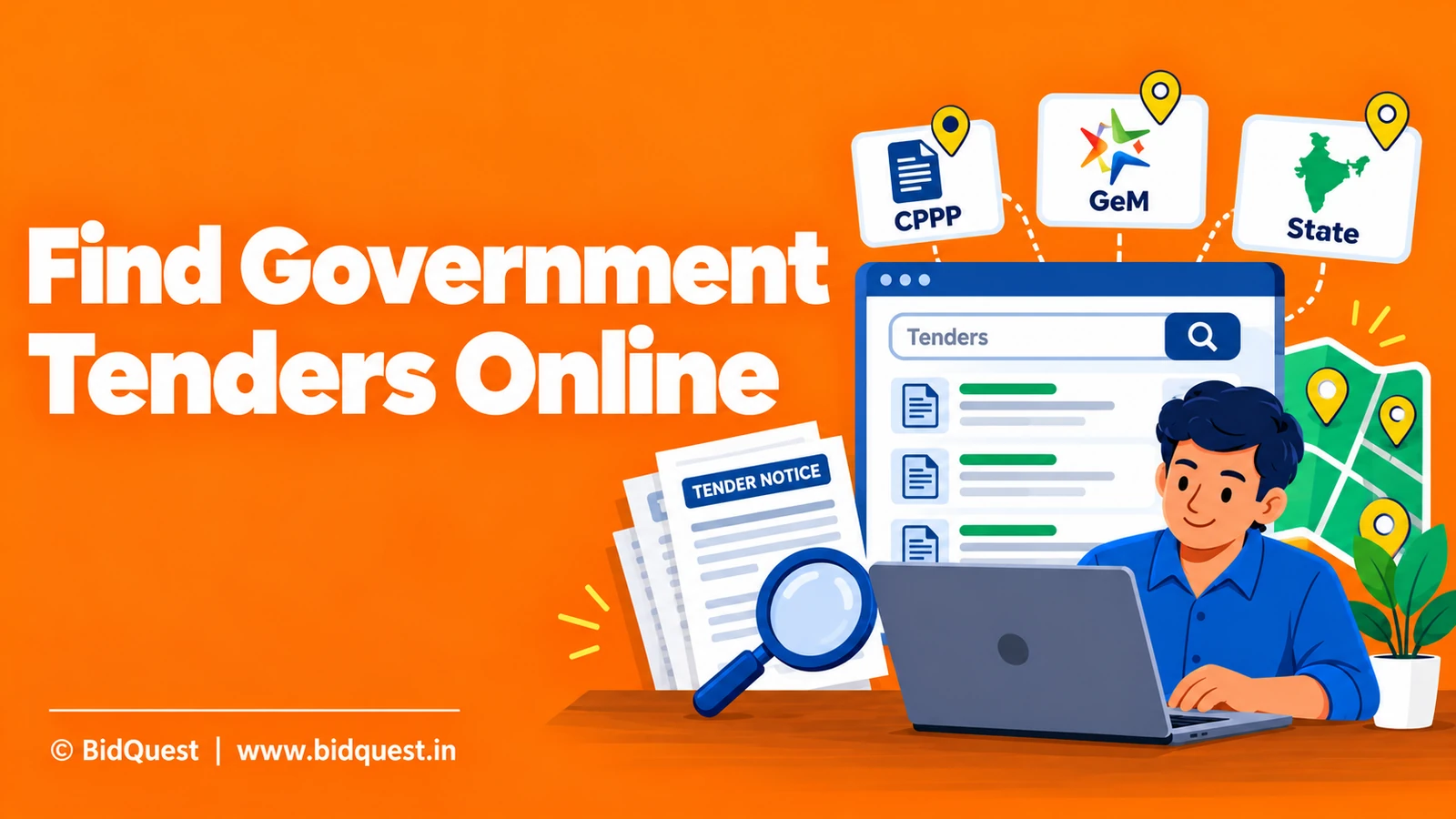
Learn how Indian MSMEs and contractors can find government tenders on CPPP, GeM and state portals, shortlist relevant notices and track corrigenda.
Read the guide
Government contracts can be commercially viable when the accepted price covers the complete obligation, financing needs and allocated risks.
Read the guide