SYSTEM // LOADING
BIDQUEST // 2026
GRID // 1280px
BIDQUEST // 2026
Zero manual search • 100% Free
Check the tender's current status and submission time on the authoritative procurement source, including relevant corrigenda.
Search produces leads; qualification turns a lead into a possible business commitment. Keep the official tender identity, buyer and source link with every shortlist entry. Check the current package and relevant amendments before relying on value, location or closing time. A useful discovery service can simplify monitoring, but the actual issuing authority remains important for procurement facts. Avoid turning a search result's simplified labels into an unsupported conclusion about eligibility or delivery.
Build a manageable search set from your real products, services and target buyers. Review both irrelevant results and known missed opportunities when refining it. Too broad a query creates noise, while aggressive exclusions can hide suitable work. Assign responsibility for verification and follow-up so an alert does not remain an unread message until the deadline. Keep official status and internal assumptions separate, particularly for cancelled, extended, archived or apparently duplicated notices.
A fictional alert names a city close to the supplier, but the official delivery schedule lists several distant sites. The team verifies the document and revises its logistics estimate before deciding whether the tender is suitable. Another listing with the same title is checked for identity rather than automatically treated as a second opportunity. The example demonstrates controlled research, not the completeness or accuracy of any particular aggregation service, search engine or procurement portal.
| Question | Evidence to review |
|---|---|
| Opportunity identity | Official ID, buyer reference and issuing unit |
| Current requirement | Complete package and amendment set |
| Location and timing | Actual delivery schedule and submission clock |
| Search usefulness | Reviewed relevant, irrelevant and missed examples |
Preserve a short reason for pursuing or declining the notice. This lets future searches improve from evidence and keeps discovery volume from being mistaken for qualified pipeline, confirmed orders or a guarantee that every relevant procurement was found.
Search the buyer's official notices and relevant portal for a new invitation, comparing its reference, scope, quantities and dates with the cancelled event. A similar title can suggest a connection without proving identical conditions. Read the cancellation and reissue communications to establish treatment of earlier bids, fees and security. Do not assume an old acknowledgement or payment automatically carries forward. Keep both records and document the differences affecting participation. This allows the team to reuse genuine background research while still assessing the new requirement. Re-tender tracking is useful only if it distinguishes historical work from the offer the buyer currently invites.
Check the notice through an independently located official source and verify the buyer's identity, procurement reference and authorised communication route. Warning signs include unexplained advance commissions, personal payment destinations, pressure to bypass a portal and guaranteed awards. These are reasons to investigate, rather than standalone proof of fraud. Do not use the suspicious sender's own phone number as the only verification channel. Preserve messages and documents while limiting further disclosure. If the notice cannot be established, pause payment and credential sharing and use appropriate reporting channels. A polished PDF, government-style seal or familiar buyer name does not independently authenticate an opportunity.
A beginner should select a small, relevant set of official sources rather than try to monitor every website in India. Identify where the target buyers publish the goods or services you can supply, then learn those systems' search and document routes. CPPP, GeM and state systems are useful starting categories, but some buyers use additional authorised arrangements. Verify the current official host independently before entering credentials. Keep discovery tools separate from submission portals. A useful source list includes what each site covers and who checks it, rather than an impressive directory whose notices nobody qualifies or verifies against the buyer's actual requirements.
WhatsApp alerts can be useful for discovery, but reliability depends on their source, freshness and how the recipient verifies them. Forwarded text can omit conditions, preserve an old deadline or attach documents from another event. Identify the official tender before acting, and independently verify suspicious payment or registration instructions. Do not share signing credentials, OTPs or confidential company records merely because a group administrator claims to provide bidding support. Keep relevant notices in a controlled record outside the chat so amendments and approvals can be tracked. The convenience of messaging should support, rather than replace, authoritative source checks and accountable bid decisions.
Use the aggregator's reference to locate the official notice, then compare the tender ID, issuing authority, title, dates and complete document set. Review important commercial and eligibility information directly in the source package, including amendments. If the official record differs, preserve the discrepancy and resolve it before acting. The aggregator may use its own internal tracking number or simplified category description. Do not substitute these for the buyer's identifiers. Verification does not require rejecting every third-party tool; it means understanding what each source establishes and ensuring the actual procurement decision relies on the current authoritative requirement rather than a convenient summary.
Use official notification options or a suitable commercial service where available, selecting keywords, categories and locations that match your business. Check whether alerts identify the source, tender ID, closing time and relevant changes. An email is a discovery message rather than proof that the deadline remains current. Review shortlisted notices and amendments on the official system. Test delivery to the intended inbox and assign responsibility for reading and qualifying the alerts. A subscription provides little value when hundreds of messages accumulate without action. Refine filters from actual reviewed results and keep a backup source-check routine for the opportunities most important to the business.
Procurement plans, budget announcements, approved projects, market consultations and EOIs can help identify potential future demand. Treat these as planning signals, not live tenders or guaranteed orders. Record the source, likely requirement and uncertainties about scope, funding and timing. Use the information to assess capabilities, supplier relationships and evidence gaps before a formal invitation appears. Do not reserve major resources solely on an unconfirmed project forecast. When a tender is published, compare the actual notice with the earlier signal instead of assuming the planned quantities or conditions remained unchanged. Early research is useful when it improves readiness without turning speculation into committed revenue.
The same procurement can appear through official publication routes, aggregators and buyer websites, each using different internal tracking labels. Compare stable identity, issuing authority, reference, lots and relevant dates before deciding that two results represent one opportunity. Similar titles can also describe separate events. Preserve distinct lots, reissues and amendments rather than collapsing records on title alone. Use one controlled working record for a verified duplicate while retaining useful source links. This reduces repeated review and inconsistent deadline tracking without erasing genuine opportunities. The duplicate decision should be explainable from procurement identity, not merely from matching words in a search-results list.
Build a targeted list of PSUs relevant to your offering and identify each one's verified procurement and vendor-information routes. Use aggregators or official consolidated systems for discovery where useful, then verify shortlisted notices at the authoritative source. Different subsidiaries or procurement categories may use different arrangements, so avoid assuming a single login covers all opportunities. Track official IDs, document versions and the relevant buyer unit. Vendor registration and a live tender are different records. The aim is to reduce repeated browsing without losing source verification, rather than treating a third-party search result as sufficient evidence of qualification, deadline or award status.
A search result may label the buyer's headquarters, publication location or inferred administrative area instead of the actual performance site. Open the official package and check delivery schedules, consignee addresses, site details and relevant annexures. Multiple locations may be involved even when the notice shows one city. Record what the displayed location represents and use the real work fronts for costing. An incorrect search label does not automatically mean the tender itself is invalid. Resolve the location evidence before deciding whether the business can participate, provide support or transport goods economically. A city filter is a discovery aid, not a substitute for the delivery obligation.
These official resources are starting points for checking the applicable process. Confirm the current notice, attachments, corrigenda and portal instructions for your own opportunity. A general explanation cannot establish eligibility, an exemption or acceptance for a particular bid. Historical manuals and registration guides may differ from a current screen or contract.
Explore opportunities with BidQuest. Compare a suitable notice with your documented capability before committing money, approving a price or submitting a bid.
Department of Expenditure. Accessed 7 Nov 2026.
Central Public Procurement Portal. Accessed 7 Nov 2026.
Learn how to read government tender documents in India: NIT, eligibility, technical specifications, BOQ, EMD, evaluation, corrigenda and submission checklist.
Read the guide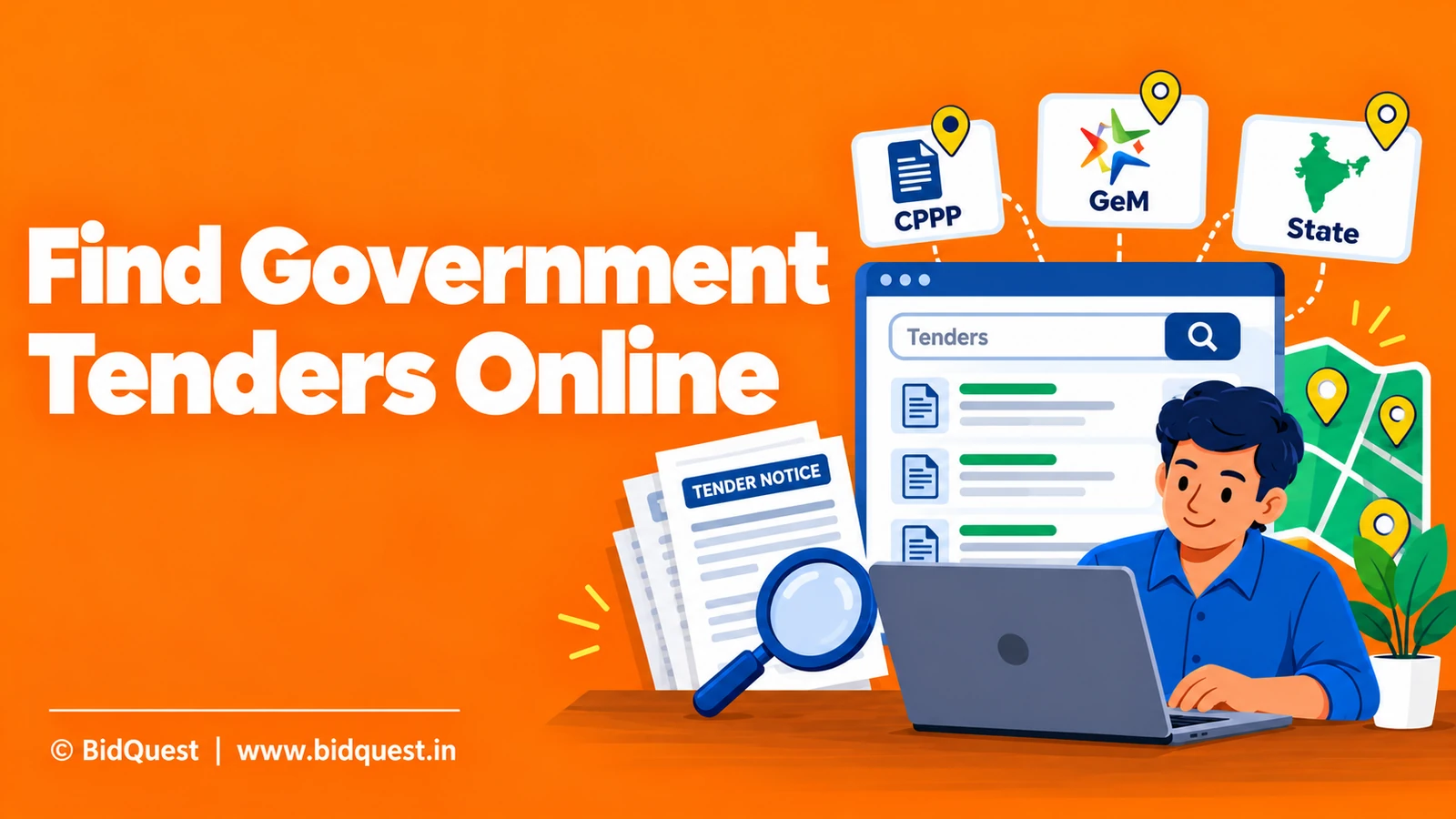
Learn how Indian MSMEs and contractors can find government tenders on CPPP, GeM and state portals, shortlist relevant notices and track corrigenda.
Read the guide
Government contracts can be commercially viable when the accepted price covers the complete obligation, financing needs and allocated risks.
Read the guide