SYSTEM // LOADING
BIDQUEST // 2026
GRID // 1280px
BIDQUEST // 2026
Zero manual search • 100% Free
Search Maharashtra tenders, check current portal notices and payments, assess qualification and site delivery, and preserve final submission evidence.

The official Maharashtra eProcurement portal provides active tenders, search, organisation and location views, corrigenda, results and bidder-help resources. During this review it also displayed payment-related notices, including an application-fee notice. Check their current applicability and the actual tender before paying. Official portal.
This guide provides an original preparation routine. It does not establish one fee, registration, exemption or delivery rule for every procurement located in Maharashtra.

Record tender ID, reference, issuing organisation, source URL, submission deadline and scope. Determine where the actual offer must be submitted.
A government purchase located in the state can use different authorities or systems. Do not assume the state portal represents every opportunity or that a buyer's notice website accepts the bid.
Keep discovery pointers separate from the official document and event references. Use stable identity to match them rather than title alone.
Confirm active status and relevant amendments before beginning full preparation.

Create related terms for products, services and work types you actually provide. Try several descriptions rather than relying on one exact keyword.
Use organisation browsing where a buyer family is known and location browsing where delivery footprint matters. For a known tender, use ID or reference to avoid selecting a similar retender or another lot.
Record why the opportunity fits: scope, location, contract size and relevant evidence. Do not let a long list of results substitute for a qualified shortlist.
Review search terms using actual results without inventing statewide demand figures.

Keep invitation, instructions, eligibility, specifications, scope, price schedule, terms and amendments together. Identify the source and issue date of each file.
Do not decide from the homepage's short description alone. Contract obligations may include installation, recurring support, inspection or records that change the cost.
Preserve original documents and create a separate approved final-use set. A working folder should not be mistaken for upload-ready evidence.
Where meaning or precedence is unclear, use the formal clarification process and appropriate review.

Create a matrix with condition, clause, evidence, reviewer and status. Examine experience, financial periods, technical records, registrations, licences and declarations actually requested.
Use pass, fail and unresolved. An available document is not automatically a matching document.
If another entity or manufacturer is part of the offer, check the permitted arrangement and attribution of credentials. Do not casually combine project histories from related companies.
Record a no-bid decision where a mandatory condition cannot be supported through a permitted route.
The portal's payment notices are a reason to plan early and verify the actual charges, method and evidence. Do not assume free document download means zero participation cost.
Separate application or processing charges, document fees and bid security where relevant. Review any claimed relief individually.
Have finance verify current recipient and method, then the coordinator reconcile the evidence to the correct event. Do not copy an older amount or account detail without checking.
Use official support for uncertain transaction status before making duplicate payments.
| Field | What to retain |
|---|---|
| Purpose | Exact charge or security category |
| Basis | Current tender or official instruction |
| Amount | Reviewed calculation or stated value |
| Route | Accepted payment or instrument method |
| Evidence | Reconciled reference and required record |
| Timing | Official deadline and internal target |
| Release | Relevant condition and follow-up owner |
Keep payment initiation and confirmation separate. If a physical original or other additional task is required, assign it independently from online uploading.
Identify the sites, quantities, access windows and completion requirements. For multi-location contracts, prepare separate delivery and evidence rows.
Do not treat a familiar city as proof that every destination is easy to serve. Equipment movement, travel, local support and supervision can materially affect the programme.
For an out-of-state bidder, confirm committed resources rather than assuming a local partner can be found after award. Check whether the proposed arrangement is permitted.
Price the delivery footprint shown by the scope, not the one that makes the estimate attractive.
A supplier considers an equipment tender covering two locations. Its initial estimate includes one delivery and one technical visit.
The site review identifies separate installation, training and support requirements. Operations prepares the sequence and finance adds an illustrative ₹25,000 for extra attendance and coordination.
The business checks whether supplier support and current staffing can meet the programme. It asks a formal question about site readiness where necessary.
The example is hypothetical. It shows why location and completion obligations belong in commercial review, not just the search filter.
Estimate supplies, resources, travel, support, financing and other required work. Reconcile tax assumptions with the accountant and the price schedule.
Then map securities, supplier payments, mobilisation and expected receipts. A profitable estimate can still require more funding than the business has available.
Test later acceptance or an extra visit. Use confirmed supplier terms and approved facilities rather than hopes of immediate payment or future bank approval.
Show management contribution and peak funding as separate figures.
Name the document and clause, identify the uncertainty and request the specific confirmation needed. Focus on qualification blockers and material scope or pricing issues first.
Useful questions can concern similar-work meaning, site allocation, installation duties, price basis, payment evidence or SLA clocks.
Distinguish confirmation from requested amendment. Do not treat a desired relaxation as already granted.
Retain the formal response and update qualification, programme and estimate where it affects the offer.
The portal provides a corrigendum route. Check the specific event and keep a log of changed requirement, affected file and reviewer.
A deadline extension is only one possible change. Quantity, scope, forms, technical requirements or eligibility can also move.
Reopen the bid decision after a material amendment. Do not leave outdated documents marked final merely because they took time to prepare.
Record the last official check time so management knows which version informed approval.
Use current official bidder instructions for enrolment, DSC, compatibility, files and final submission. Confirm the authorised person and available time before closing.
Protect account secrets and signing control. A document preparer can coordinate without receiving unrestricted credentials.
Perform legitimate readiness checks early; do not submit dummy offers or use unapproved workarounds.
If technical assistance is needed, identify the failed stage and relevant non-secret error details and use verified official channels.
First review content: qualifications, identity, forms, signatures where required, readable evidence, technical scope and the approved BOQ.
Then review the actual system action: correct event, attachments, required payments and current final submission procedure. Retain the acknowledgement or summary.
A complete internal file set does not prove the portal received it. A portal receipt does not prove every document addresses the requirement.
Keep both checks visible and preserve the approved submitted set.
Assign an owner for official status, requests and communications. Keep the original offer when answering a clarification and follow the permitted process.
If selected, compare the confirmed contract with the approved assumptions before mobilisation. Hand operations the scope, sites, programme and evidence; give finance the securities and billing plan.
If not selected, review deposit, instrument and document closure tasks where relevant. Do not abandon cash records when sales effort ends.
Use actual outcomes to refine future qualification and delivery estimates.
The observed payment-related notices should prompt finance to check current applicability and the actual event's requirements. Do not wait until final upload to examine timing or confirmation.
Record the official instruction, transaction reference and evidence status. If payment remains uncertain, use the relevant support route before repeating a transfer.
Distinguish a confirmed receipt from a bank debit or initiated action. Keep the unresolved task visible to the bid owner.
This is a practical readiness control, not a claim that every Maharashtra procurement uses identical payment arrangements.
Compare IDs, references, location, quantity and buyer when several results look similar. Keep distinct events separate until their relationship is verified.
Do not upload the same BOQ or security reference to several opportunities solely because their descriptions match. Use an event-specific final file index.
For simultaneous bids, assess combined resource and funding exposure. Several small awards can create a larger mobilisation problem than one individually reviewed contract.
Management should see that portfolio scenario before approving every offer independently.
If awarded, give the service lead the actual site list, response requirements, resource commitments and evidence. Identify which changes need formal authorization.
Do not allow a general Maharashtra coverage claim to replace a site-specific operating plan. Confirm travel, local support and replacement arrangements relevant to the contract.
Finance should receive the billing period, acceptance route and funding schedule. The bid's commercial assumptions should remain accessible for comparison with actual delivery.
That prevents the company from rebuilding a complex regional programme after the award.
Preserve official qualification, ranking and award information where disclosed. Keep interpretation separate from observed results.
If unsuccessful, identify what the business can improve without inventing reasons the buyer did not state. Close any security or document tasks.
If selected, record actual delivery and cost lessons for future estimates. Use authentic performance evidence where a later tender permits it.
The discovery routine becomes more valuable when it leads to credible preparation and a complete procurement record.
Save the relevant official notice and the event-specific instruction used for payment or submission. A remembered rule from an earlier Maharashtra bid should not replace evidence of what the present opportunity requires.
Use the state portal and the relevant issuing organisation's record.
No. Verify actual charges and current applicable notices.
Follow the designated route in the specific invitation.
Review actual eligibility and delivery conditions rather than location alone.
The approved file set, relevant payment/security evidence and final official acknowledgement.
Prepare one qualified shortlist record and a complete evidence, site and cash review. Explore BidQuest for discovery, then verify and submit through the official procurement route.
mahatenders.gov.in. Accessed 12 Oct 2026.
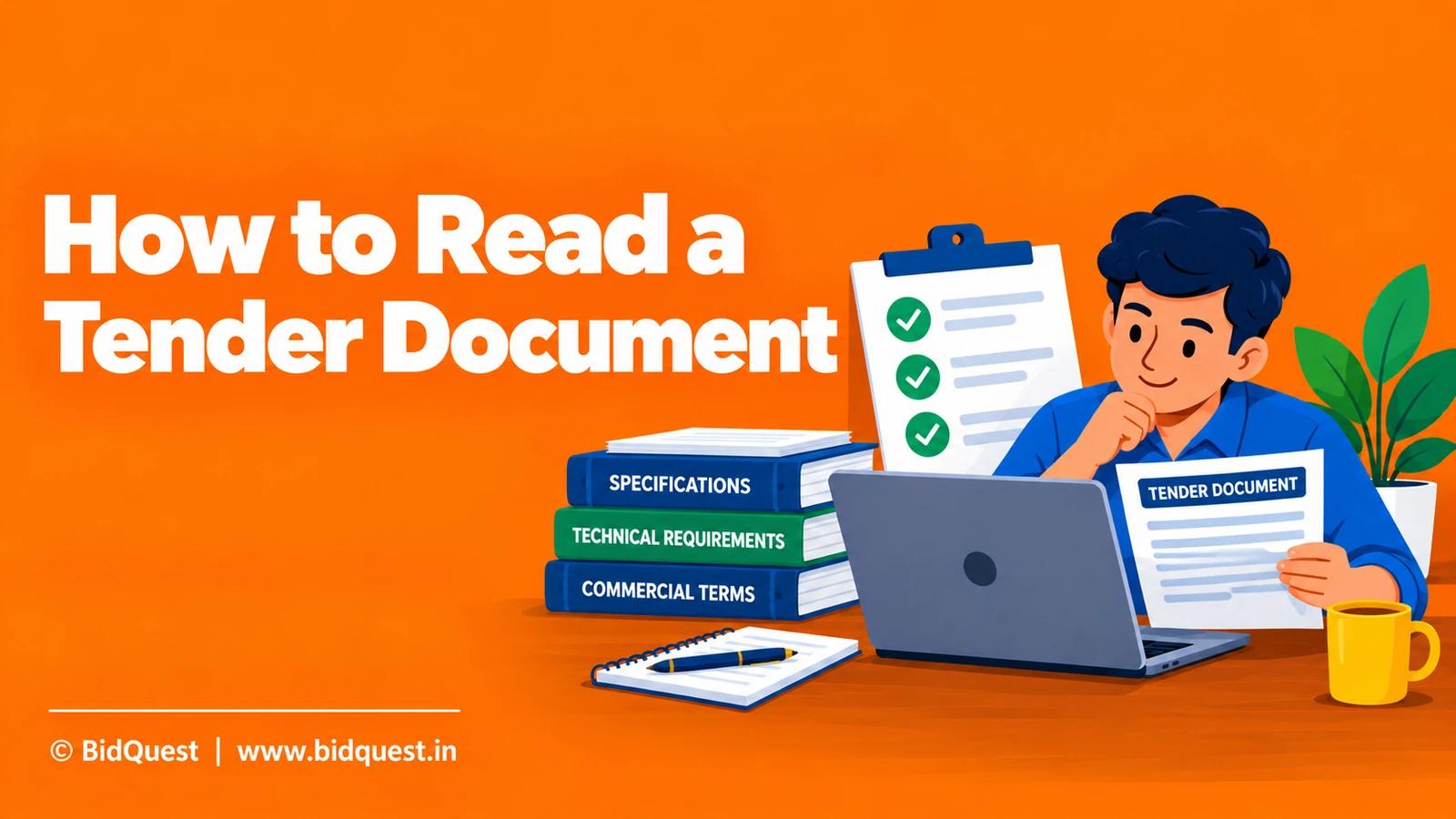
Learn how to read government tender documents in India: NIT, eligibility, technical specifications, BOQ, EMD, evaluation, corrigenda and submission checklist.
Read the guide
Learn how Indian MSMEs and contractors can find government tenders on CPPP, GeM and state portals, shortlist relevant notices and track corrigenda.
Read the guide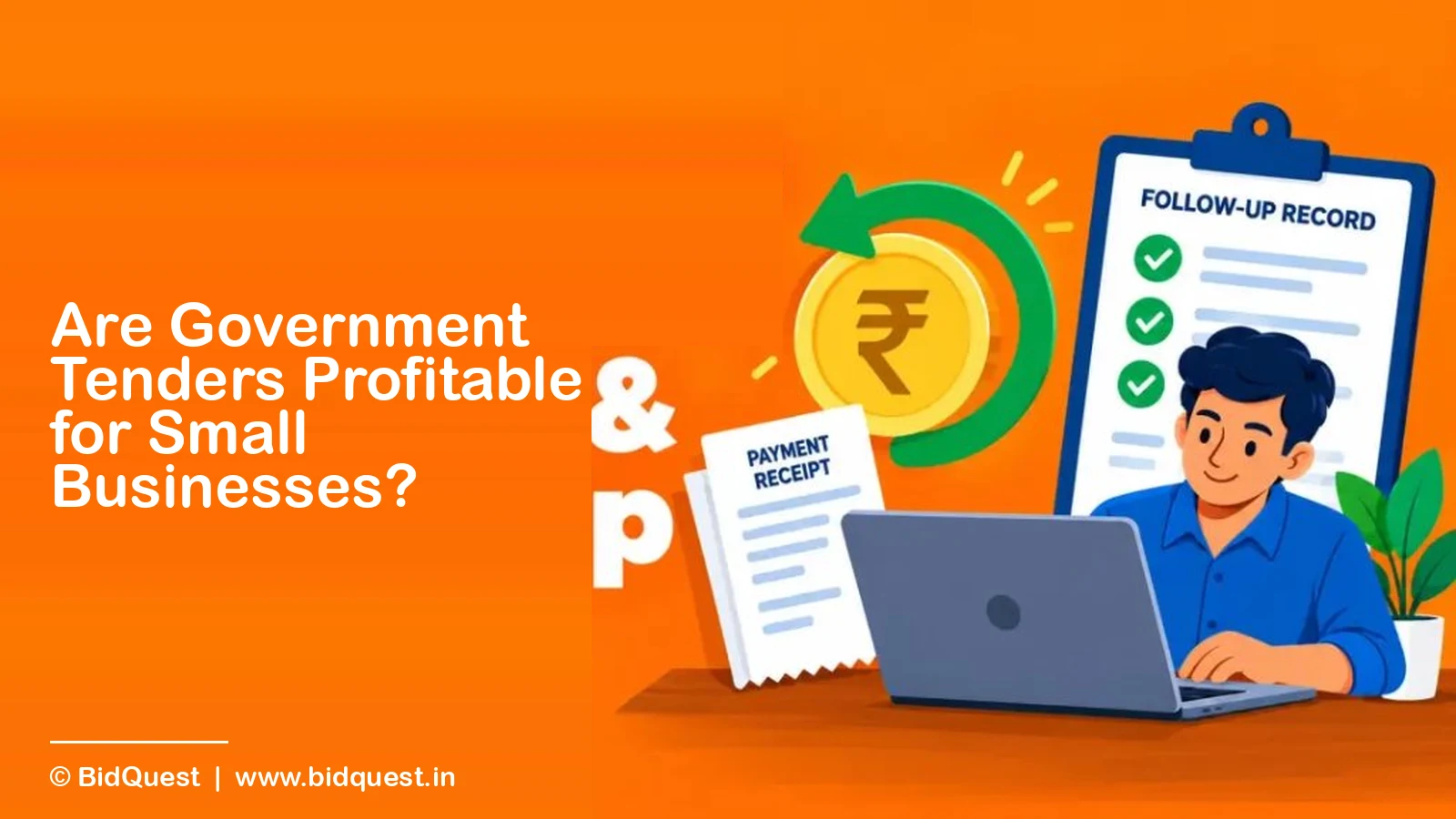
Government contracts can be commercially viable when the accepted price covers the complete obligation, financing needs and allocated risks.
Read the guide