SYSTEM // LOADING
BIDQUEST // 2026
GRID // 1280px
BIDQUEST // 2026
Zero manual search • 100% Free
Locate NHAI opportunities through verified official procurement or authorised publication routes and preserve the exact event identity.
An authority may publish opportunities, maintain vendor lists and require product or capability approvals through different arrangements. Establish which function each record serves and which buyer unit issues the actual procurement. A registration application, panel listing and firm order are not interchangeable milestones. Preserve the scope and conditions of any genuine approval, and check current official guidance rather than carry historical limits or fees into a new decision.
For a shortlisted opportunity, read the full qualification, technical, site and commercial package independently. Group names and familiar logos should not replace verification of the contracting entity and authorised process. A supplier's relevant certificate can still cover another product or unit. Ask precise permitted questions about actual gaps and keep commitments and application status honest. Do not buy an intermediary's claim that a vendor record guarantees invitations, access to confidential information or a fixed share of future orders.
A fictional business completes vendor enrolment and plans permanent recruitment against the organisation's total published procurement value. Its reviewer checks the actual terms and finds no firm assignment or volume commitment. The business records registration as an access milestone and evaluates later notices individually. No real authority's arrangement is characterised by this example. It shows why potential demand and confirmed revenue need different evidence and why administrative progress should not automatically trigger irreversible delivery commitments.
| Question | Evidence to review |
|---|---|
| Buyer identity | Relevant authority, company, unit and official route |
| Approval scope | Genuine application or issued status and conditions |
| Opportunity | Actual notice, qualification and contract model |
| Business commitment | Supported order, authority and delivery plan |
Use the same distinctions in pipeline reporting and handover. A third-party alert is a research lead, while a current official record and the actual procurement terms establish what the business may claim about participation, qualification and award.
Check each actual procurement system's enrolment and account rules rather than assume one registration covers every state or that every similar portal requires an entirely new legal identity. Related technology can still support separate organisational instances and procedures. Keep the same genuine business records consistent while tracking account IDs, authorised users and relevant certificate mappings separately. Use the buyer's official route to determine where the bid must be released. Do not create duplicate identities to resolve a login problem without guidance. A useful access register explains which system each account serves, while event-specific qualification and final submission remain independent obligations.
Vendor registration is not normally a guarantee of orders unless an actual authorised arrangement establishes a specific commitment. Read whether it provides access, empanelment, source qualification or another defined status and what further enquiry, competition or approval follows. Preserve scope, validity and continuing conditions. Do not record the maximum possible business as contracted revenue or commit large resources solely because the supplier was listed. When a genuine order arrives, review its own requirements and authority. A useful business pipeline distinguishes registration completed, opportunity identified, bid submitted and contract awarded, preventing an administrative milestone from being presented as a confirmed sales outcome.
Calculate the full expected delivery cost on a consistent basis, then distinguish revenue, contribution, overhead and the margin measure you intend to use. Include relevant sourcing, labour, logistics, support, financing and allocated contract risks, avoiding double-counted taxes or refundable security principal as final expenses. Test quantity and timing uncertainty where the contract leaves it with you. Mark estimates separately from confirmed quotations. A chosen percentage cannot make omitted obligations disappear. Approve the sustainable price before release and compare actual results after execution. This provides a reproducible commercial decision rather than an arbitrary markup on a supplier rate that covers only part of the promised work.
EMD is the bid-security amount or arrangement required by the particular procurement to address specified bidding risks. Read the actual form, amount, deadline, validity and exemption provisions rather than assume every event uses the same percentage or payment method. EMD is different from a non-refundable tender fee and from performance security after award. Keep liquidity and expense treatment separate in the bid budget. A payment receipt does not automatically prove every security condition was satisfied. The bidder should establish what must be provided, by whom and when, preserving evidence that matches the official notice and the final submitted offer.
A JV or consortium can support qualification only where the tender permits the arrangement and its actual rules on roles, combined credentials and responsibility are met. Do not assume that informal cooperation merges every member's experience or turnover. Establish the lead, participation shares or other required allocation, authority and genuine commitments. Map each criterion to the member evidence allowed to satisfy it. Obtain appropriate legal, financial and technical review before release. The business should understand performance and liability consequences as well as entry benefits. A proposed partner name in a bid is not a substitute for the agreement and evidence required by the actual procurement.
Similar work is defined by the actual tender, not solely by a matching project title. Compare the required activity, scale, technical characteristics, period and completion evidence with the past assignment. Relevant differences should be assessed honestly and, where necessary, by competent technical owners. Do not relabel unrelated work or omit a material scope limitation. Keep the client record, contract and completion evidence connected. If the definition leaves a consequential uncertainty, seek clarification through the permitted route before closing. The useful output is a requirement-to-project comparison that lets the buyer verify the claimed experience, rather than a list of prestigious clients without a demonstrated scope match.
There is no universal turnover requirement for every government tender. Read the actual clause, relevant period, calculation basis and documentary evidence. Distinguish the bidder's turnover from project value, group revenue and proposed order size. Check whether any expressly applicable relaxation exists and what conditions remain. Prepare a reproducible calculation from the appropriate accounts and obtain competent financial review where needed. Do not invent sales or substitute another entity's figures merely to pass a threshold. A business should pursue opportunities matching its supported position, rather than assume registration on a portal or an enterprise certificate automatically removes every financial qualification.
The tender's complete document list governs the response, not a universal checklist copied from another event. Identify bidder identity, authority, qualification, technical, commercial and prescribed declarations, then connect each requirement to the relevant record. Check entity, scope, validity, format and signing. Include amendments and attachments that modify the list. A large folder can still omit one decisive annexure, while irrelevant documents can obscure the answer. Preserve an approved index and verify the released package against it. The useful evidence is what the actual procurement requires from this bidder, not everything the company happens to possess or a consultant supplied as a generic sample.
Test the supported device, browser, token, certificate, account mapping, signing utility, required file formats and payment or submission steps well before closing. Use genuine portal guidance and preserve unresolved errors for support. Also verify authority, approved content and the current document set; technical access cannot cure an ineligible or inaccurate bid. Confirm how the system records final release and where the acknowledgement appears. Plan accountable cover if the authorised operator becomes unavailable. The purpose of testing is to expose realistic dependencies while they can still be resolved, rather than create a checklist whose completion is assumed to guarantee a future submission or award.
Use the exact DSC type specified by the current official tender portal and procurement instructions. CPPP guidance identifies its applicable signing requirement; do not assume a different system or an old tutorial establishes the same configuration everywhere. Confirm the certificate holder, organisation details where required, validity and supported token before purchase or mapping. Signing and encryption functions should not be bought interchangeably without understanding the requirement. Test the legitimate setup before a deadline and preserve official guidance relevant to the system. A vendor's broad claim that one product works for all tendering is not a substitute for the actual portal's documented requirement.
These official resources are starting points for checking the applicable process. Confirm the current notice, attachments, corrigenda and portal instructions for your own opportunity. A general explanation cannot establish eligibility, an exemption or acceptance for a particular bid. Historical manuals and registration guides may differ from a current screen or contract.
Explore opportunities with BidQuest. Compare a suitable notice with your documented capability before committing money, approving a price or submitting a bid.
Department of Expenditure. Accessed 7 Nov 2026.
Central Public Procurement Portal. Accessed 7 Nov 2026.
Central Public Procurement Portal. Accessed 7 Nov 2026.
Central Public Procurement Portal. Accessed 7 Nov 2026.
Learn how to read government tender documents in India: NIT, eligibility, technical specifications, BOQ, EMD, evaluation, corrigenda and submission checklist.
Read the guide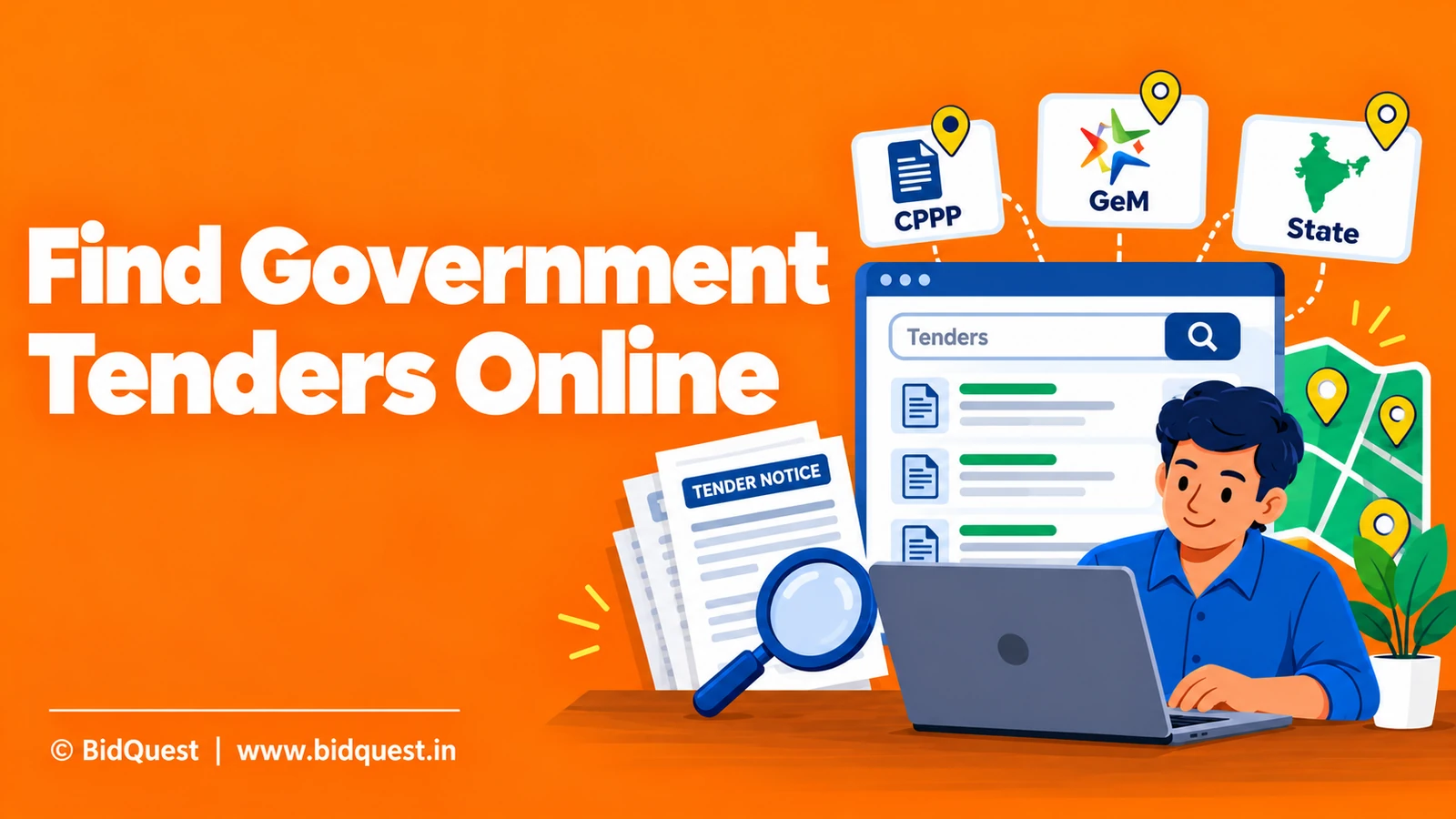
Learn how Indian MSMEs and contractors can find government tenders on CPPP, GeM and state portals, shortlist relevant notices and track corrigenda.
Read the guide
Government contracts can be commercially viable when the accepted price covers the complete obligation, financing needs and allocated risks.
Read the guide