SYSTEM // LOADING
BIDQUEST // 2026
GRID // 1280px
BIDQUEST // 2026
Zero manual search • 100% Free
Understand when MSE bid-security or EMD relief may apply, what documents tenders request, and why registration alone is not a universal exemption.

This practical guide is written for micro and small enterprises reviewing tender security. It explains the decision points and checks that matter during procurement rather than relying on old portal screenshots or generic promises. The issuing authority’s current tender documents, formal amendments and official portal instructions take precedence over this article.
Government tender procedures vary with the buyer, procurement category and contract. Use the process below as a working framework, and replace every illustrative assumption with evidence from the specific notice you intend to act on.
For this task, the core question is: Eligibility and evidence: MSE EMD exemption. The answer depends on separating opportunity discovery, formal eligibility, preparation and actual submission. Keep a dated tender folder with the original NIT, conditions, published corrigenda and any supporting evidence. If a buyer has a different instruction, the tender takes priority.
A useful control is to write down who owns each decision. The commercial team can estimate price, but an authorised signatory must verify the bid declarations; a technical specialist can confirm specifications but should not silently interpret policy exemptions. Asking each owner to sign off on the requirements they control is more reliable than a single unchecked document folder.
The Ministry of MSME explains that the Public Procurement Policy for Micro and Small Enterprises Order, 2012 includes tender-set and earnest-money benefits within its stated procurement scope. Its official policy materials also distinguish goods and services supplied by MSEs from works contracts. This distinction matters when a business undertakes both manufacturing and construction.
Use the Ministry policy notifications and revised FAQs as the starting point, then read the tender clause. Different procurement channels, buyers and procurement categories can lead to different rules and supporting documents.
What to record: Add the relevant tender clause or official manual section, the supporting evidence, the person checking it, the last checked date, and an unresolved-issue flag. A document can appear complete while its conditions or validity period still fail the tender; that is why the review log should capture both possession and applicability.
Indian businesses commonly say MSME, but a particular procurement benefit may specifically refer to micro and small enterprises. A medium enterprise should not assume that every policy benefit written for MSEs applies to it. Likewise, a trader offering goods made by another firm may not have the same position as the producer under the policy.
Check the registration classification, what your business actually produces or provides, and how the procurement policy defines eligible suppliers. Seek a formal clarification when the tender language is ambiguous.
Common failure to avoid: Do not copy an assumption from a different tender. Verify the current notice and its amendments, keep the original source link, and ask for formal clarification before the buyer’s query cutoff if a consequential instruction is unclear.

Read the notice inviting tender, instructions to bidders and payment schedule. Record whether the clause asks for an EMD amount, a bid security declaration, a bank guarantee or another form. Note the beneficiary, validity, upload requirements, permitted relaxations and forfeiture or disqualification provisions.
If the tender allows an exemption, look for its specific documentary procedure. Do not insert a generic declaration where a prescribed form is mandatory.
Team hand-off: Explain the decision to the next owner in plain language. Include the exact file or clause and what still requires approval. An unexplained “done” status offers little protection when a colleague must assemble the final response.
A current Udyam certificate may be relevant evidence, but the tender may request category alignment, self-declarations or other documents. Keep business legal name, category, ownership and scope consistent across documents. A discrepancy between registration and bid entity may need clarification.
Create an evidence matrix listing each tender clause, claimed relaxation, policy source, upload slot and reviewer. Do not upload confidential records to unofficial third-party sites.
What to record: Add the relevant tender clause or official manual section, the supporting evidence, the person checking it, the last checked date, and an unresolved-issue flag. A document can appear complete while its conditions or validity period still fail the tender; that is why the review log should capture both possession and applicability.

Works contracts, reseller arrangements, special procurement conditions and non-central authorities require careful scope checks. Ministry of MSME policy materials provide background, not universal authority to override the original tender. If a security clause appears inconsistent with an applicable rule, use the clarification channel rather than silently ignoring it.
Record the precise official response. If no formal resolution is available before closing, assess the risk and obtain competent procurement advice; a missed mandatory security instrument can be costly.
Common failure to avoid: Do not copy an assumption from a different tender. Verify the current notice and its amendments, keep the original source link, and ask for formal clarification before the buyer’s query cutoff if a consequential instruction is unclear.
EMD or bid security relates to bid participation. Performance security is a separate post-award obligation where required by the contract. A relief from one requirement does not automatically waive the other. Read the contract draft before pricing your bid.
Track obligations at three moments: bid submission, award acceptance and contract delivery. Record which department or finance signatory is responsible at each stage.
Team hand-off: Explain the decision to the next owner in plain language. Include the exact file or clause and what still requires approval. An unexplained “done” status offers little protection when a colleague must assemble the final response.

BidQuest is a SaaS opportunity-discovery tool. It may help you identify tenders to assess, but it cannot grant an EMD exemption or change buyer policy. Verify all financial requirements in the government-issued documents.
Use an internal screening note such as “MSE relief potentially applicable; official clause confirmation pending” rather than labelling an opportunity “EMD-free” before verification.
What to record: Add the relevant tender clause or official manual section, the supporting evidence, the person checking it, the last checked date, and an unresolved-issue flag. A document can appear complete while its conditions or validity period still fail the tender; that is why the review log should capture both possession and applicability.

A hypothetical small manufacturer sees a goods tender with an EMD clause and an MSE-relaxation note. The owner checks the enterprise classification, verifies that the quoted items are produced by the business, reviews the exact relaxation wording and prepares the specified supporting evidence. A separate works tender is not automatically treated the same way. Neither conclusion can be drawn from the Udyam certificate alone.
The lesson from this scenario is to make each decision reproducible. Another colleague should be able to locate the original notice, understand why a requirement was treated as applicable or not applicable, and confirm which version was used for the submission. Keep records of unresolved questions rather than turning them into facts.
| Review item | What to capture | Evidence to retain |
|---|---|---|
| Official source | Buyer portal and tender reference | Original notice URL and downloaded copy |
| Required action | What the clause instructs | Clause reference and annexure |
| Assigned owner | Who verifies and signs off | Dated checklist entry |
| Change monitoring | Any new corrigendum or portal notice | Amendment register |
| Submission proof | Official completion or acknowledgement | Portal-generated record, if relevant |
This table is a practical control rather than an additional government requirement. Adapt it to the actual procurement form and do not substitute an internal spreadsheet for official portal confirmation.
BidQuest is a SaaS service, not a government tender-issuing or bid-submission authority. You can use the existing BidQuest tender search as another place to research relevant opportunities before opening the corresponding official notice. This distinction is especially important where eligibility, money, bid security, deadlines or award outcomes are concerned. BidQuest cannot change the buyer’s conditions, confer exemptions, or guarantee results.
After discovery, confirm the original tender on CPPP, GeM or the designated state/buyer portal. Use that official channel for required registration, clarification, uploads, payments and acknowledgements. The practical value of brand integration is helping readers move from useful guidance to an appropriate next action, not replacing the government workflow.
No. Check applicable policy scope, bidder classification, tender-specific documents and the buyer’s instructions.
Do not assume benefits written for micro and small enterprises apply to medium enterprises.
No automatic link. Treat post-award performance security as a separate contract requirement.
For current primary documentation, use: Public Procurement Policy for MSEs; Public Procurement Policy for MSEs Order, 2012: overview; Manual for Procurement of Goods, Second Edition 2024; CPPP Bidders Manual Kit. Source access reviewed 9 October 2026; the source pack records which sections support each general claim and which live event conditions remain unverified.
Next step: Review the particular tender with the checklist above, then explore relevant opportunities on BidQuest and return to the government portal for the authoritative documents and actions.
Development Commissioner, Ministry of MSME. Accessed 9 Oct 2026.
Ministry of MSME. Accessed 9 Oct 2026.
Department of Expenditure. Accessed 9 Oct 2026.
National Informatics Centre / CPPP. Accessed 9 Oct 2026.
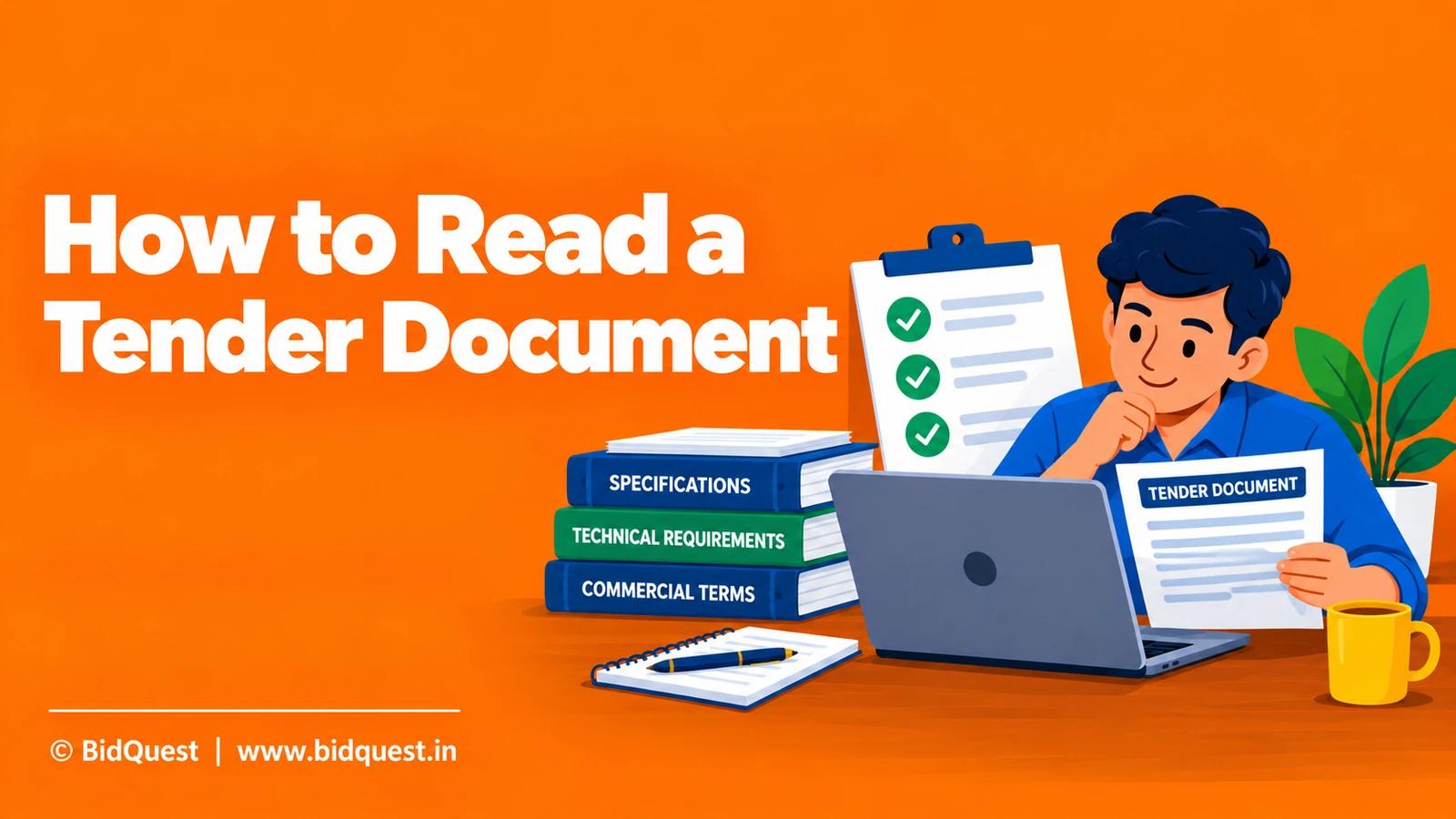
Learn how to read government tender documents in India: NIT, eligibility, technical specifications, BOQ, EMD, evaluation, corrigenda and submission checklist.
Read the guide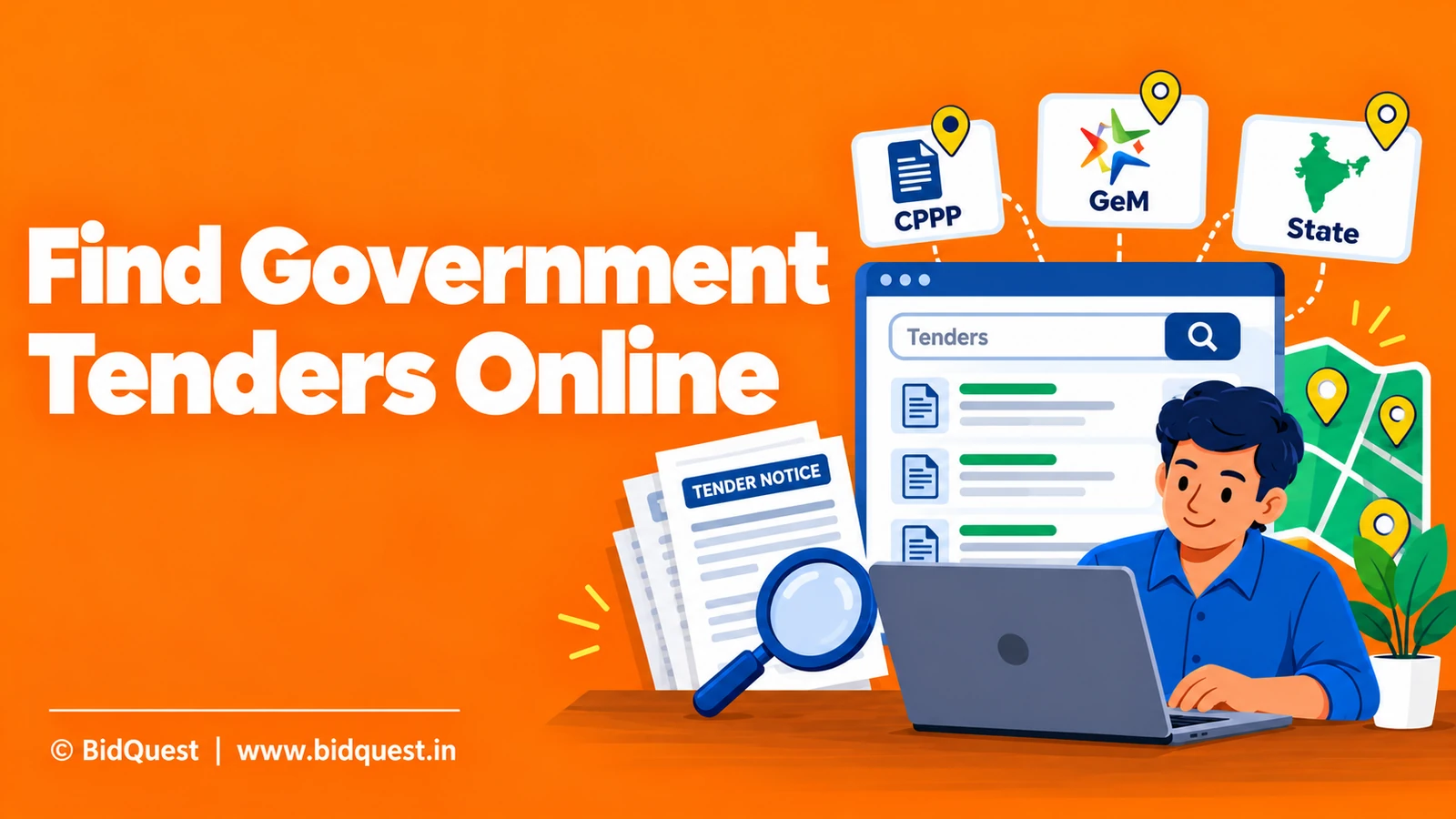
Learn how Indian MSMEs and contractors can find government tenders on CPPP, GeM and state portals, shortlist relevant notices and track corrigenda.
Read the guide
Some procurement provisions reserve specified items for relevant MSE sourcing, but the actual current list, product description and applicable buyer framework must support the claim.
Read the guide