SYSTEM // LOADING
BIDQUEST // 2026
GRID // 1280px
BIDQUEST // 2026
Zero manual search • 100% Free
Check whether the enterprise's recorded activity accurately describes the goods or services relevant to the claim and what the applicable procurement policy requires.

Start by naming the precise claim: an exemption, a qualification relaxation, purchase preference and an annual procurement policy objective are different things. Then establish the applicable framework, eligible enterprise and activity and evidence required by the event. A broad business label is not enough. Check current classification and genuine records, keeping manufacturer, trader and service-provider roles accurate. Do not assume one registration turns every requirement into an exception.
Build a simple claim-to-source map before selecting a benefit field or signing a declaration. Retain the relevant policy, tender clause and registration evidence and identify any date or scope limitation. Resolve genuine ambiguity through the permitted channel, using appropriate professional review where interpretation is consequential. Keep mandatory quality, technical and performance obligations visible even where a particular financial condition is relaxed. A supported benefit improves an eligible position; it does not create resources, guarantee an order or make inaccurate documents acceptable.
A fictional small reseller has enterprise registration and sees a favourable exemption option. Before selecting it, the team checks whether the actual activity and bidder role fall within the provision. Where the basis is unclear, it seeks an authorised explanation instead of changing the business description. This example does not decide an individual enterprise's entitlement. It shows why status, activity and event applicability need to be assessed together rather than inferred from the presence of a certificate.
| Question | Evidence to review |
|---|---|
| Claimed treatment | Precise benefit and applicable current provision |
| Enterprise status | Genuine entity, classification and relevant date |
| Activity and role | Actual goods, services and bidder relationship |
| Submission | Required declaration, attachments and acknowledgement |
Update the review when material facts change. Preserve prior and current positions so later teams can distinguish a valid historical claim from an unsupported assumption that it continues unchanged after a different classification, activity or procurement requirement.
Review the actual classification change, relevant dates and any applicable transition provisions before deciding its effect on a tender or ongoing contract. Current status, status at bidding and contractual performance obligations may need separate assessment. Update authoritative business information through the proper process and communicate where the actual terms require it. Do not continue a claim solely because an old certificate remains in the bid folder, or assume that every earlier benefit disappears in the same way. Preserve the original basis and competent assessment of the change. Appropriate policy and contractual review should establish the actual consequence rather than a convenient general rule.
Compare the stated rejection reason with the benefit claimed, the applicable policy and the evidence actually submitted. Possible distinctions include enterprise classification, activity, bidder role, document validity and the event's response requirements. Do not assume the certificate was fake or that every rejection is automatically unlawful. Preserve the exact clause, source record and released offer, then use the permitted clarification or representation process. Obtain competent advice for consequential policy interpretation. A useful response addresses the particular mismatch or disputed treatment, rather than submitting a larger folder or repeating a general statement that registration exempts the business from all tender conditions.
Experience relaxation must be established from the relevant current provisions and actual tender, not inferred solely from an MSE registration. Identify the condition being relaxed, the eligible bidder and any technical or quality requirements that still apply. Match the claim to genuine capability and the prescribed evidence. The buyer's safety, specialist or performance needs may make particular qualifications material. Do not borrow another entity's work history without a permitted attribution basis. If an opportunity is unsuitable, build an eligible record through other work instead of assuming a registration certificate guarantees entry. Preserve any authorised clarification that affects the participation decision.
A new MSE should read whether the applicable procurement permits relaxation of past-turnover conditions and what evidence is needed. Do not assume newness removes the requirement in every contract. Relevant technical capability, quality and other mandatory conditions can remain. Check the applicant entity and activity and preserve the actual clause supporting the claim. A promoter's experience or another company's accounts should not be relabelled as the new enterprise's own turnover. If the opportunity does not provide an applicable route, consider work whose conditions the business can satisfy. Clarify genuine ambiguity before commitment rather than submit a confident but unsupported exemption declaration.
A service business should assess whether the relevant MSE benefit applies to its actual enterprise and the services being procured. Registration alone does not establish every qualification or exemption. Check the policy, notice, service activity and required evidence, keeping fee, security, experience relaxation and purchase preference distinct. Staffing, licences, geographic coverage and technical capability may remain necessary even where a particular commercial benefit applies. Describe the service honestly and cost the complete obligation. An authorised claim should identify the applicable provision and supporting record rather than depend on a broad assertion that all service providers with an Udyam certificate receive identical treatment.
A trader should distinguish general enterprise registration from benefits linked to goods produced or services rendered by an eligible MSE under the applicable policy. Permission to bid as a reseller does not automatically establish manufacturer-specific treatment. Read the current policy and event conditions, the activity covered by the record and any relevant clarification. Do not describe the business as a manufacturer merely to obtain a benefit. If the actual position is unclear, seek authoritative guidance on that specific claim. The bid should accurately state the seller's role, product source and evidence, keeping participation eligibility separate from exemption or purchase-preference entitlement.
Tender-fee treatment must be checked separately from EMD exemption and other MSME-related benefits. Establish whether the applicable framework and actual notice provide the claimed fee relief to the proposed bidder and activity. A portal processing charge or private subscription is not automatically the same as the buyer's tender-document fee. Record each charge, its basis and the evidence needed for an exemption. Avoid treating a general statement about MSMEs as authority to skip every payment step. Resolve ambiguity through the permitted channel, preserving the response and submission record so the business can explain why it paid or validly claimed relief from a particular charge.
An eligible MSE may have an EMD exemption under the applicable procurement provisions, but the claim must fit the actual enterprise, activity and event. Do not assume every MSME, trader or medium enterprise receives identical treatment. Read the notice, required evidence and permitted submission process, and distinguish EMD from performance security and other charges. Keep the registration record current and explain any relevant product or service match. If the wording conflicts with an applicable policy, raise the precise issue through the authorised route before closing. Submitting an unsupported exemption checkbox can leave the offer without the security evidence the buyer actually requires.
Relevant benefits depend on the applicable procurement framework, enterprise classification, activity and actual notice. Do not treat the broad MSME label as a universal package of exemptions. MSE procurement policy, startup relaxations, fee treatment and purchase preference answer different questions and require their own evidence. Identify the benefit claimed, the qualifying entity and the provision supporting it. Match the enterprise's actual goods or services to the procurement and submit the required records through the prescribed process. A valid registration is useful evidence but does not waive every technical condition or guarantee an order. Keep current classification and event-specific qualification separately documented.
Udyam and NSIC arrangements serve different purposes and should not be treated as interchangeable certificates. Identify which registration, scheme or evidence the actual procurement refers to and what benefit is being claimed. A valid enterprise classification record does not automatically establish current NSIC scheme coverage, and an NSIC record does not replace every business or technical qualification. Verify relevant scope, entity and validity through the appropriate official route. Avoid paying for another registration merely because a consultant calls it universally mandatory. The useful decision is whether the specific arrangement adds a supported participation benefit for the products or services the business actually proposes to supply.
These official resources are starting points for checking the applicable process. Confirm the current notice, attachments, corrigenda and portal instructions for your own opportunity. A general explanation cannot establish eligibility, an exemption or acceptance for a particular bid. Historical manuals and registration guides may differ from a current screen or contract.
Explore opportunities with BidQuest. Compare a suitable notice with your documented capability before committing money, approving a price or submitting a bid.
Department of Expenditure. Accessed 7 Nov 2026.
Central Public Procurement Portal. Accessed 7 Nov 2026.
Ministry of MSME. Accessed 7 Nov 2026.
Office of Development Commissioner, MSME. Accessed 7 Nov 2026.
Startup India. Accessed 7 Nov 2026.
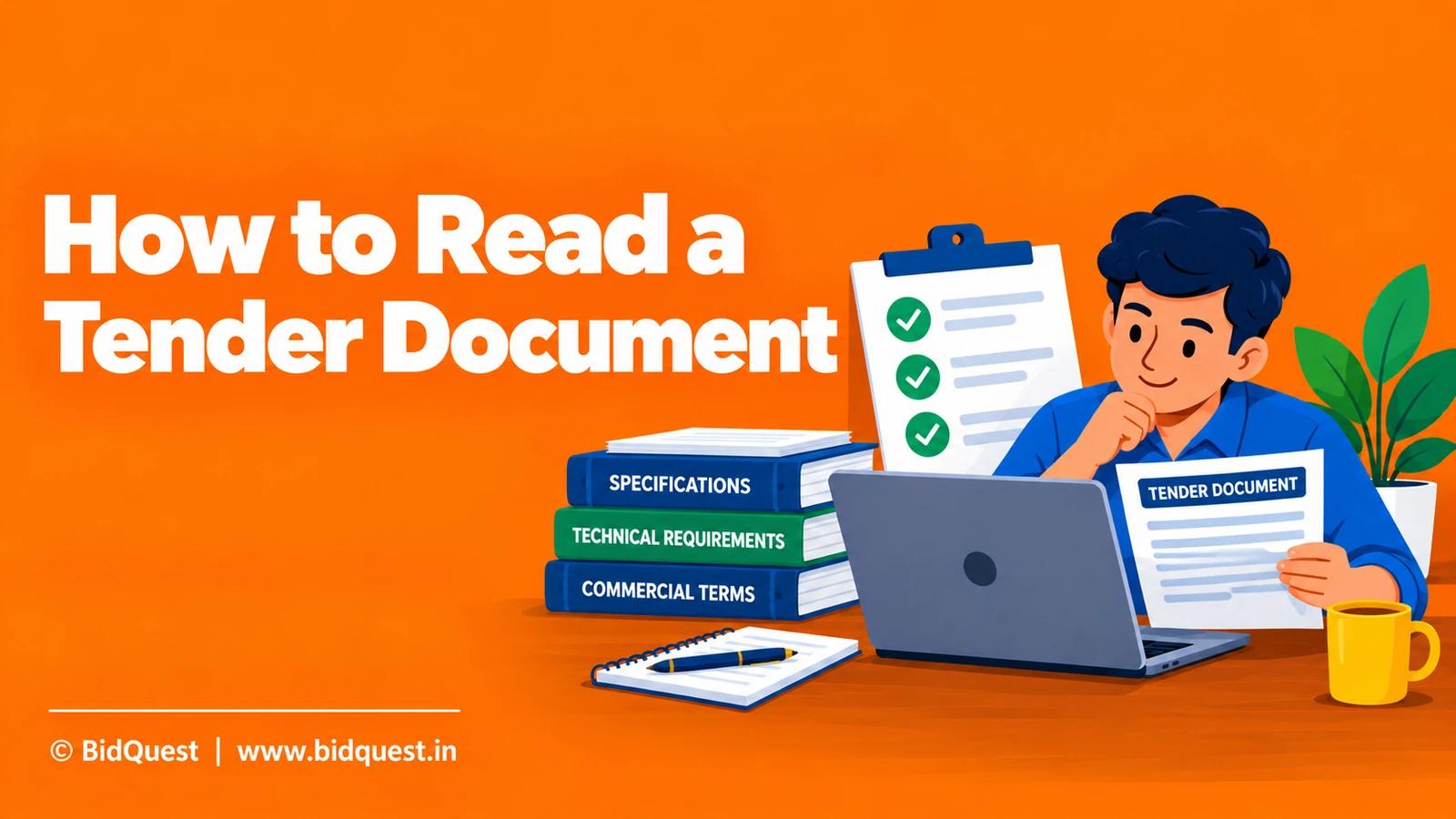
Learn how to read government tender documents in India: NIT, eligibility, technical specifications, BOQ, EMD, evaluation, corrigenda and submission checklist.
Read the guide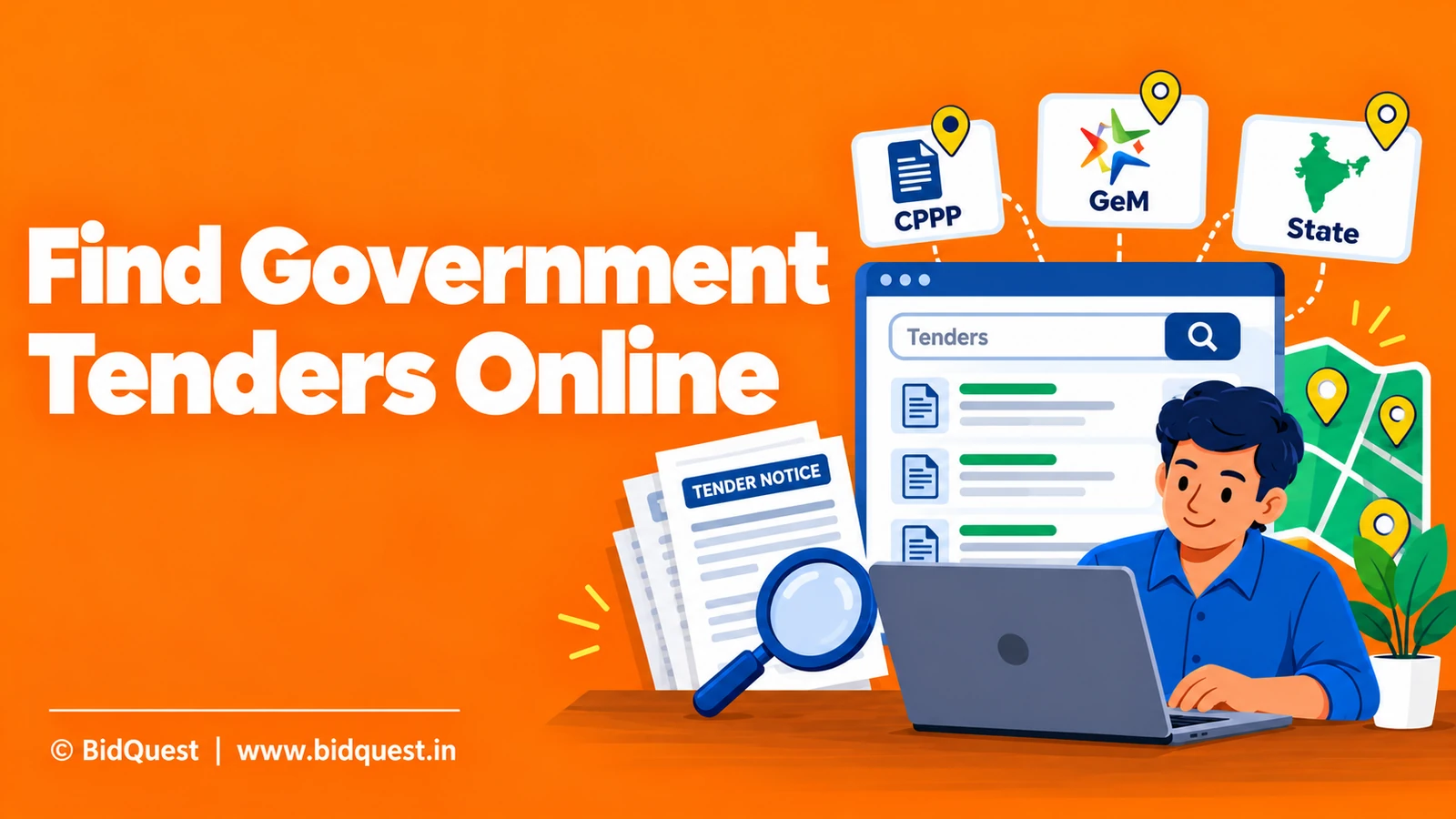
Learn how Indian MSMEs and contractors can find government tenders on CPPP, GeM and state portals, shortlist relevant notices and track corrigenda.
Read the guide
Understand when MSE bid-security or EMD relief may apply, what documents tenders request, and why registration alone is not a universal exemption.
Read the guide