SYSTEM // LOADING
BIDQUEST // 2026
GRID // 1280px
BIDQUEST // 2026
Zero manual search • 100% Free
START ON GEM
Source-checked guidance for registration, tender discovery, portal workflows, and seller readiness.
Cancellation after acceptance depends on the actual order, applicable GeM terms, authority and reason.
Read the guide
Some reverse-auction arrangements provide an extension mechanism when specified bidding activity occurs near a scheduled close.
Read the guide
Account restrictions can arise under the applicable marketplace process, but an order dispute should not automatically be described as a final suspension or debarment.
Read the guide
A service business can examine GeM's relevant service-category and seller-onboarding arrangements, using its actual identity and capabilities.
Read the guide
An individual should identify the business form under which they propose to sell and check GeM's current eligibility and onboarding instructions for that arrangement.
Read the guide
A reseller should check whether the GeM event accepts that role and what manufacturer authorisation, product evidence and bidder qualifications it requires.
Read the guide
Check the particular GeM event and current platform requirements to establish whether an approved catalogue or other offering status is needed for participation.
Read the guide
Use GeM's current permitted catalogue-update process and distinguish changing an available listing from changing a bid already submitted or an order already accepted.
Read the guide
An accidental auction price requires immediate reference to the actual event's correction, withdrawal and finality rules.
Read the guide
Follow the current official procedure for deleting or deactivating an offering, and check the effect on active bids, quotations and orders before proceeding.
Read the guide
Check whether the actual GeM order permits partial deliveries, the relevant schedule and any conditions affecting inspection, invoicing or completion.
Read the guide
Whether an already submitted GeM bid can be changed depends on the event stage, current platform procedure and applicable instructions.
Read the guide
Do not assume multiple seller accounts are permitted merely because the system allows more than one email address.
Read the guide
Whether an unbranded item can be listed depends on the current category rules and actual buyer requirements.
Read the guide
For imported goods, check the current marketplace category and bid conditions, applicable import and product requirements, origin evidence and the seller's actual supply arrangement.
Read the guide
Do not treat the ability to create a GeM account without entering a GSTIN at a particular step as proof that all later supplies can be made without GST registration.
Read the guide
Whether a GeM order can be declined, and the consequences of doing so, depend on the actual stage and applicable terms.
Read the guide
Selling another company's products requires checking the actual listing and bid rules, your commercial authority and the manufacturer's support arrangement.
Read the guide
Check the current seller and catalogue arrangements for the business's actual product and service activities.
Read the guide
An own brand is not a universal prerequisite for every marketplace supply opportunity, but the actual category, listing and bid conditions determine what is permitted.
Read the guide
Do not replace the contracted model merely because another product is available or appears better.
Read the guide
Treat a GeM account change as a question of legal identity, authorised-user control and platform procedure, rather than an informal transfer of a password.
Read the guide
Review the applicable GeM instructions and current event stage for any permitted withdrawal process and its consequences.
Read the guide
A consultant is not automatically necessary to create a GeM seller account.
Read the guide
L1 status generally identifies a lowest-priced position on the relevant evaluation basis, not an unconditional promise of award.
Read the guide
Use the current official service-category workflow and describe the business's actual deliverable, coverage and qualifications.
Read the guide
After establishing a valid seller profile, use the current catalogue workflow for the correct product category and supply accurate item information and supporting evidence.
Read the guide
Change the registered email through GeM's current official profile or support process with the required authority and verification.
Read the guide
Follow the current official account-maintenance or recovery process to change a GeM registered mobile number.
Read the guide
Check the official order and payment information using the correct seller, invoice and transaction references.
Read the guide
Log in through the verified official GeM route and review the current account or application status relevant to the stage you completed.
Read the guide
Choose the category whose current definition and attributes genuinely describe the product, not the category that seems easiest to approve.
Read the guide
Use GeM's current official closure or deactivation process and first identify outstanding bids, orders, payments, disputes and record-retention needs.
Read the guide
Look for the official submission status and acknowledgement required by the actual GeM event, recording the bid number, time and released version.
Read the guide
Compare the GeM profile with the authoritative business, PAN and other relevant records to establish exactly which name differs and why.
Read the guide
Establish the correct tax position for the actual supply and invoice using appropriate professional review, then follow the applicable correction procedure.
Read the guide
Use the current official GeM account interface and guidance to locate whatever seller-registration record or downloadable evidence the platform presently provides.
Read the guide
Use the official GeM bid-search routes and relevant product or service terms to identify opportunities, then compare the actual requirement with what the business offers.
Read the guide
Review the official rejection information and the relevant requirement in the submitted package before forming an explanation.
Read the guide
Prepare the invoice on the actual order, supply and tax basis required by current GeM and applicable invoicing rules.
Read the guide
Getting a first GeM order requires more than completing signup.
Read the guide
Ask the actual manufacturer or its properly authorised channel for the document required by the GeM bid.
Read the guide
Improve visibility by maintaining accurate category, model, brand and specification information and a genuine, current commercial offer.
Read the guide
Maintain a link between the live listing and current supplier availability, configuration, lead time and support arrangements.
Read the guide
Prepare for a first GeM bid by completing the relevant seller and offering requirements, then reading the particular event's documents and current official submission guidance.
Read the guide
Use GeM's current official support route for the particular order issue, identifying the seller, order, relevant invoice or delivery record and exact problem.
Read the guide
Build a reconciliation from the order and accepted supply to the invoice, authorised deductions and bank receipt.
Read the guide
Use GeM's current official brand-registration or approval guidance for the relevant category and your actual rights in the brand.
Read the guide
A partnership or LLP should register under its actual business constitution using the current official GeM requirements and a properly authorised representative.
Read the guide
For a proprietorship, establish the correct relationship between the proprietor's identity and the business or trade name before starting GeM onboarding.
Read the guide
Raise a delivery-extension request through the contract's permitted GeM process, explaining the reason, affected quantity, revised programme and supporting evidence.
Read the guide
Reach GeM through its verified official route and use the current password-recovery process for the correct account.
Read the guide
Respond to a buyer clarification through the permitted official channel, addressing the exact question and deadline.
Read the guide
Set the listing price using the current platform's pricing instructions and the complete commercial obligation for the item.
Read the guide
Use the price fields or financial schedule specified for the GeM event, on the required unit, quantity and tax basis.
Read the guide
Use the official GeM event record and authorised notifications to track the relevant technical, financial and award stages.
Read the guide
Use the verified official GeM account and current profile-update procedure for bank details, ensuring the person making the change has appropriate authority.
Read the guide
Update specifications through the current permitted catalogue process using genuine records for the actual model and configuration.
Read the guide
Follow the particular GeM event's current instructions for technical-document content, format and submission.
Read the guide
GeM payment depends on the applicable order terms and completion of the relevant supply, acceptance and billing steps.
Read the guide
An ordinary bid stage generally establishes the offered technical and commercial response under its submission instructions, while a reverse auction concerns a separately defined.
Read the guide
There is no universal completion time that should be promised for every GeM registration.
Read the guide
Use the current applicable GeM terms and actual order to identify the payment period and the event from which it runs.
Read the guide
Your auction floor should come from a complete cost and cash assessment of the actual contract, including supply, logistics, service, financing and relevant risk exposure.
Read the guide
Official GeM registration material describes seller registration as free.
Read the guide
Payment can differ from the invoice headline because of contractually applicable deductions, statutory withholding, accepted quantities or other authorised adjustments.
Read the guide
Prepare the information required by the current official GeM workflow for your business constitution and authorised user.
Read the guide
Verify the order in the official GeM system and compare its identity, items, quantities, price, delivery, payment and incorporated conditions with the approved offer.
Read the guide
If performance is at risk, identify the exact shortfall and escalate before making additional unsupported promises.
Read the guide
Equal quoted prices are handled under the actual event's evaluation and tie-resolution provisions.
Read the guide
A custom bid describes a procurement route whose actual scope and response conditions need their own review.
Read the guide
A minimum decrement is the price-change requirement specified for an auction step or offer under the actual rules.
Read the guide
A reverse auction is a defined competitive pricing stage in which eligible participants submit price changes under the event's rules.
Read the guide
ATC refers to additional terms and conditions associated with the bid.
Read the guide
CRAC is the consignee receipt and acceptance record used in the relevant GeM process.
Read the guide
OEM means original equipment manufacturer in the relevant product context; a reseller offers goods made by another entity.
Read the guide
PRC refers to the provisional receipt stage in the relevant GeM goods process.
Read the guide
Ask what service is being sold, who performs the actual assessment and which charge is official versus optional professional assistance.
Read the guide
Verify the change through the authorised buyer and official order process before redirecting goods.
Read the guide
Identify the stated reason for refusal and preserve the order, dispatch, delivery attempt and product evidence.
Read the guide
First establish whether payment is due under the applicable terms and whether acceptance, invoice and supporting requirements are complete.
Read the guide
Verify the actual listing and your rights before making an allegation about another seller's brand use.
Read the guide
First confirm the spelling, ownership and category of the proposed brand and review GeM's current official route for a missing brand.
Read the guide
Confirm that the product is genuinely outside the current available category structure rather than using an unfamiliar description or brand name.
Read the guide
Confirm the actual delivery and acceptance position before assuming a missing CRAC is merely an administrative delay.
Read the guide
After GeM signup, complete and validate the business profile, establish appropriate account control and review the products or services the business can genuinely offer.
Read the guide
Determine whether vendor assessment applies from the current GeM arrangements for the actual seller, category and event.
Read the guide
Open the official GeM bid record and review the complete set of available documents, attachments and amendments, rather than relying on a forwarded summary.
Read the guide
Find the account or seller identifier in the current official GeM profile, dashboard or authorised account communication.
Read the guide
Participation in a GeM reverse auction depends on the applicable event rules and any preceding qualification or invitation conditions.
Read the guide
Check GeM's current seller-registration conditions for the proposed business type and the person authorised to represent it.
Read the guide
Read the exact participation or validation message and establish which requirement is blocking the intended bid.
Read the guide
Check whether the verification step is using the correct permitted identity route and the contact details associated with it.
Read the guide
Read the actual lock or restriction message before deciding whether the problem concerns login attempts, identity validation, administrative action or another account condition.
Read the guide
Reconcile the exact invoice and payment references with the seller's bank records before concluding that a paid label proves final receipt.
Read the guide
Read the exact PAN-validation message and compare the entered identifier and relevant name with the authoritative tax record and the business constitution selected.
Read the guide
Check the current catalogue status, category, brand and item attributes before assuming that absence from one search means the product is approved but being suppressed.
Read the guide
Read the actual rejection message and compare the submitted invoice with the order, acceptance evidence and applicable tax requirements.
Read the guide
Read the actual rejection or correction message and identify whether it concerns category fit, missing evidence, specification inconsistency, brand authority or another issue.
Read the guide
Read the assessment decision or correction request and map it to the evidence actually submitted.
Read the guide
Understand GeM buying routes, distinguish catalogue readiness from event participation, and prepare a realistic seller workflow without assumed thresholds.
Read the guide
Review a GeM custom bid with a requirement map, deliverable breakdown, quantity interpretation, cost model and evidence-backed submission process.
Read the guide
Prepare a GeM service bid by translating scope into resources, checking category terms, costing delivery and mapping evidence to acceptance requirements.
Read the guide
Prepare for a relevant GeM vendor assessment with checks for role, scope, financial and technical evidence, exemptions and current official instructions.
Read the guide
Prepare a delivery-extension review for a GeM order with a delay timeline, supporting evidence, revised plan and checks for security and billing effects.
Read the guide
Review a rejected or returned GeM delivery using specification, inspection and quantity records, then plan corrective action through the official process.
Read the guide
Prepare a clear GeM issue record with a timeline, contractual references, evidence and resolution request, while distinguishing support from disputes.
Read the guide
Plan a multi-site GeM order with site-wise quantities, access checks, installation resources, evidence ownership and a realistic cash-flow schedule.
Read the guide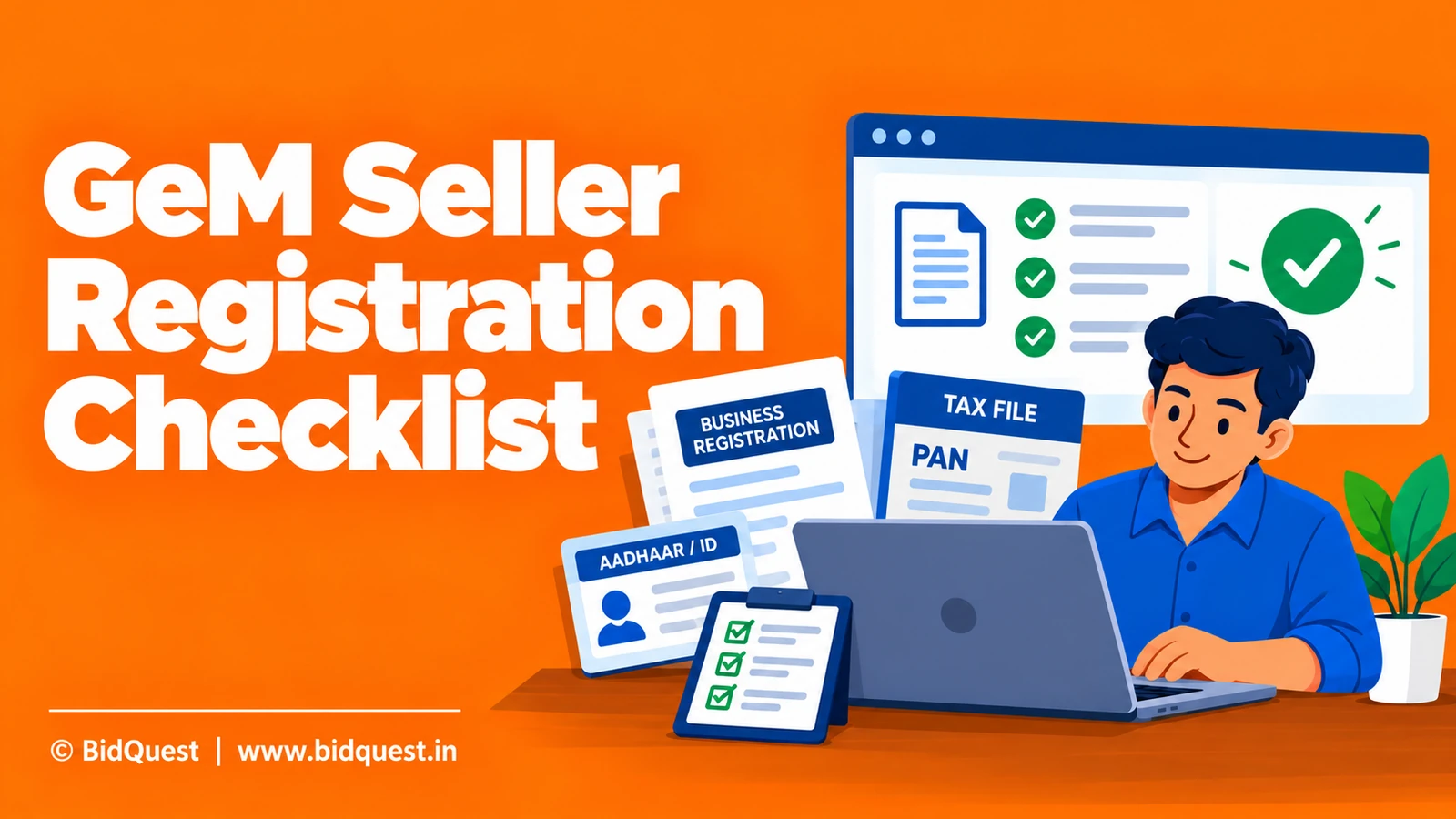
Prepare a GeM seller registration information checklist covering account ownership, business profile, tax details, authorised signatory and catalogue readiness.
Read the guide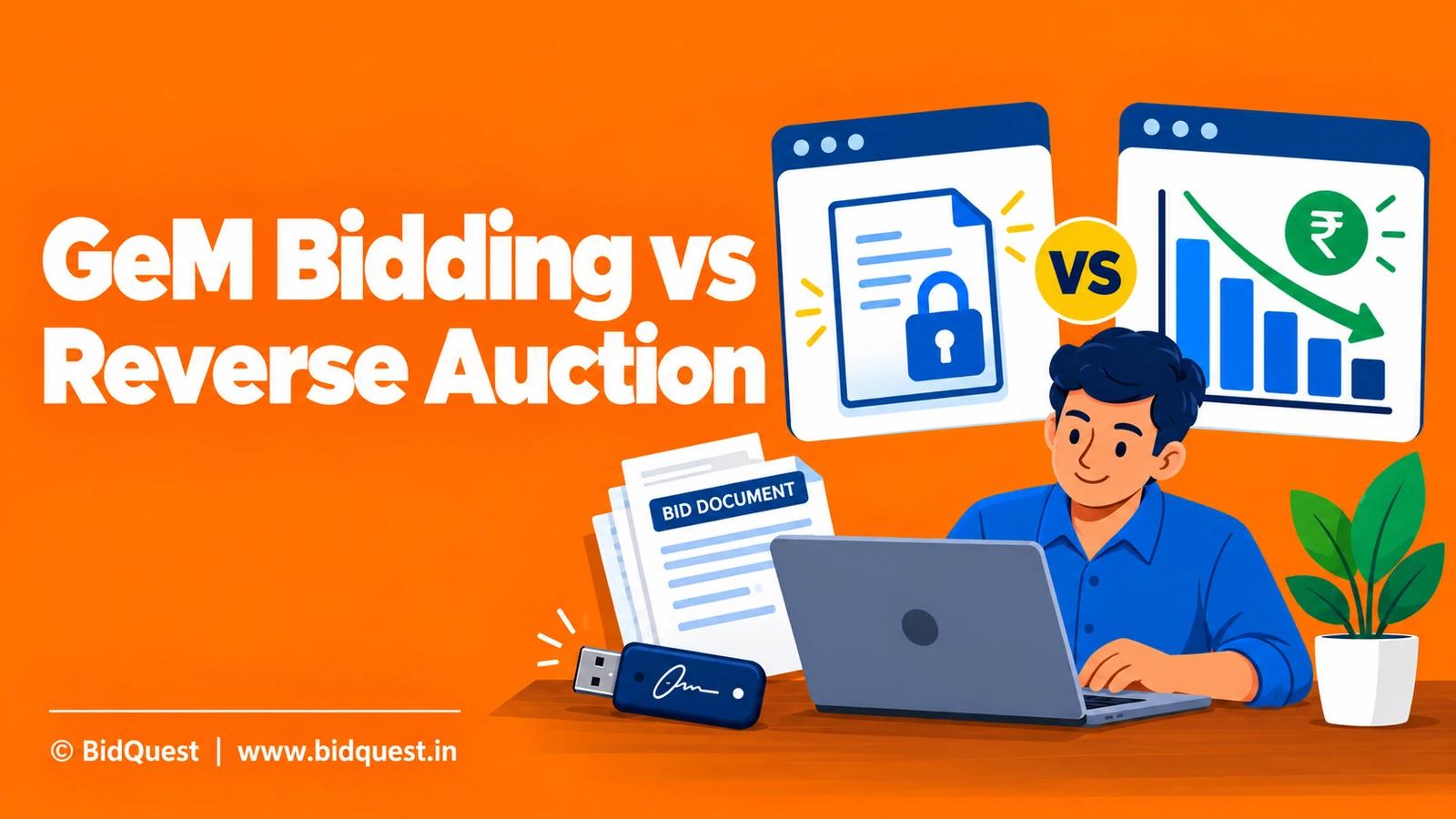
Understand the practical difference between a GeM bid and reverse auction, including eligibility, price events, published rules and seller precautions.
Read the guide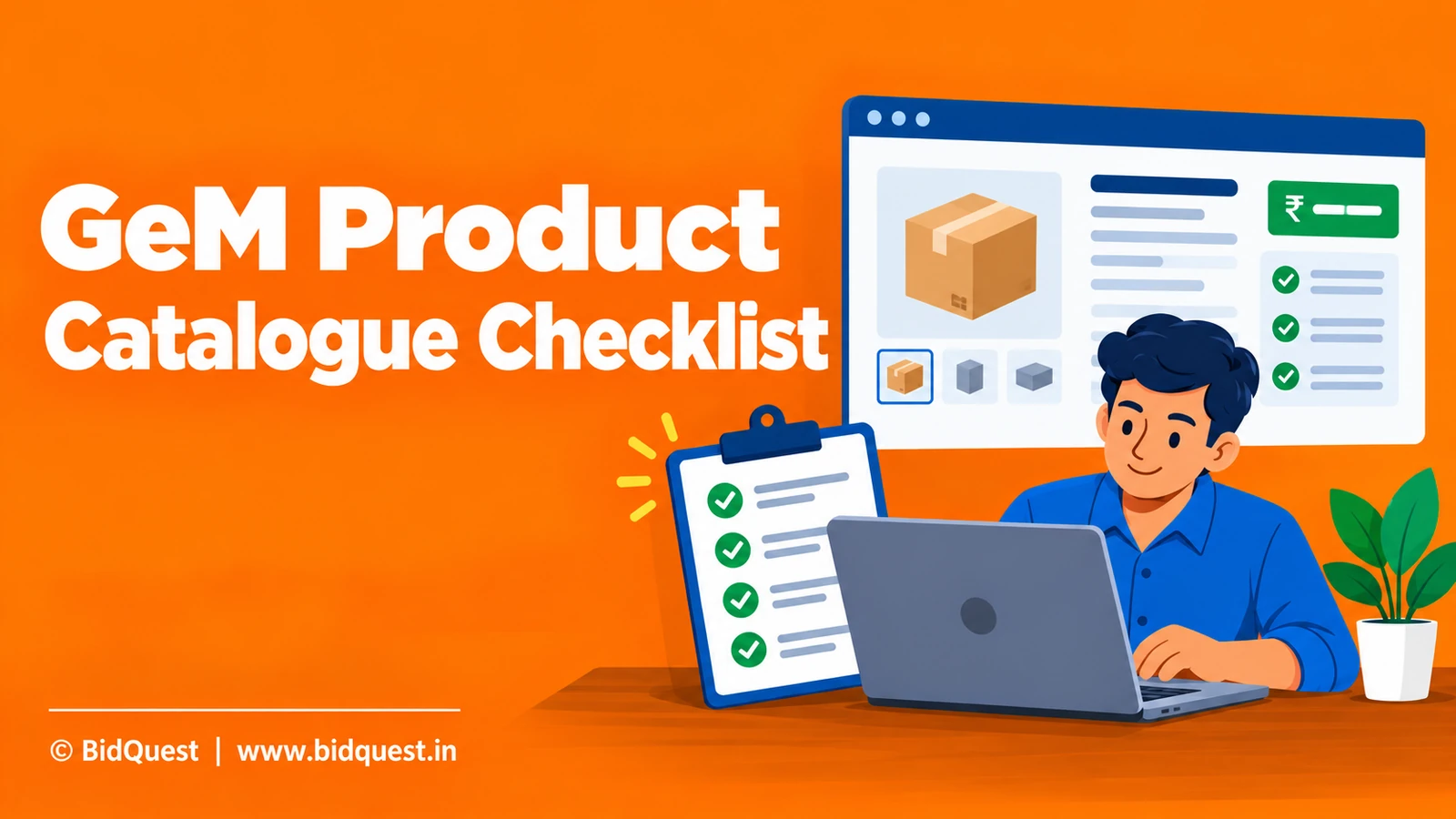
Use a practical GeM product catalogue quality checklist to check specifications, product identity, evidence, pricing and bid readiness before offering goods.
Read the guide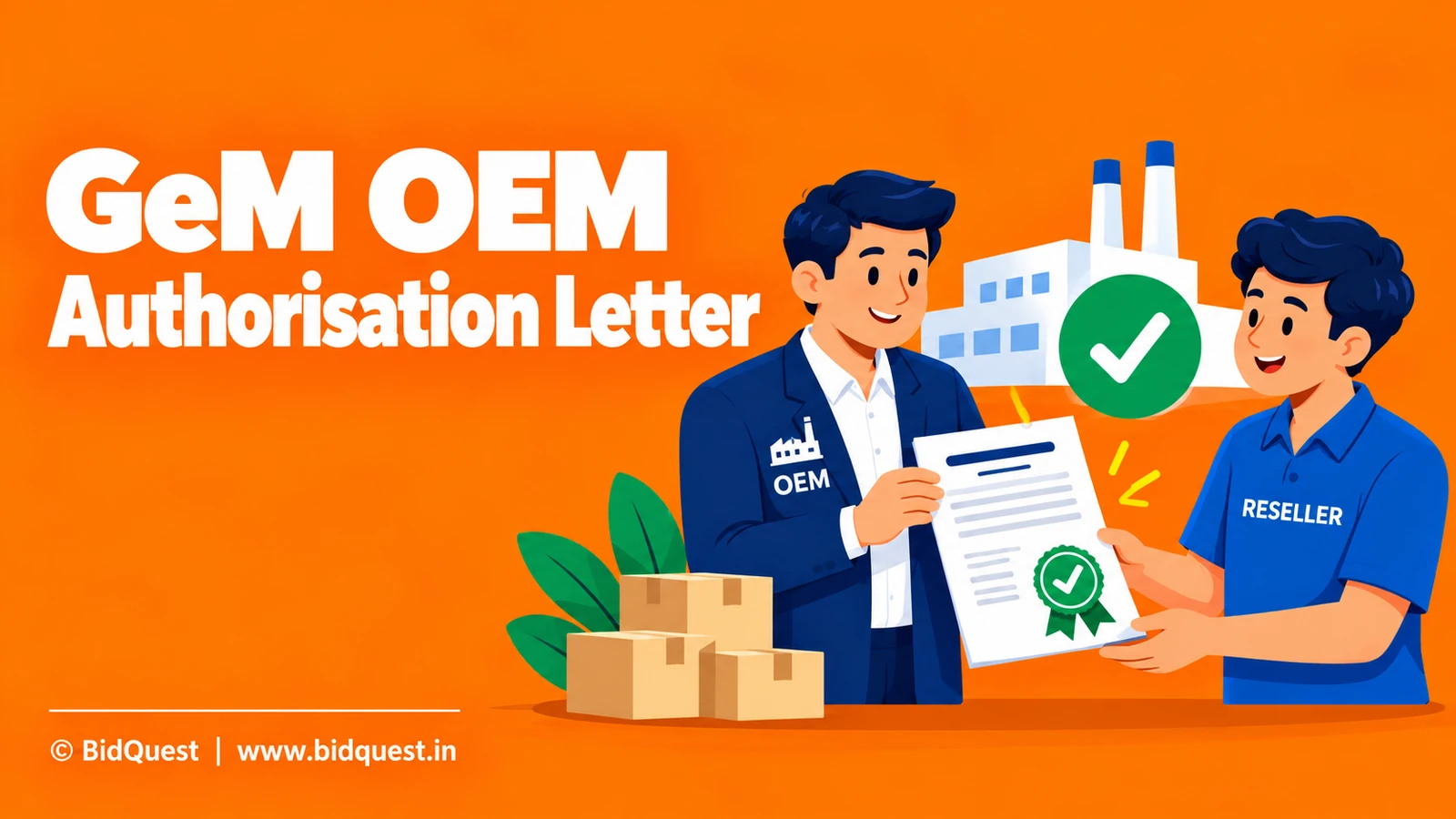
Understand when a GeM bid may request OEM authorisation, how resellers can verify scope and validity, and how to avoid unsupported manufacturer claims.
Read the guide
Learn how to compare GeM buyer-added terms, standard platform terms and bid attachments before pricing or submitting an offer.
Read the guide
Review GeM seller catalogue, bid commitments, delivery capacity, acceptance evidence and service obligations before pricing or fulfilling orders.
Read the guide
Learn how to separate official GeM registration costs, other platform obligations, and optional consultant charges before paying for assistance.
Read the guide